
Last updated November 24, 2026
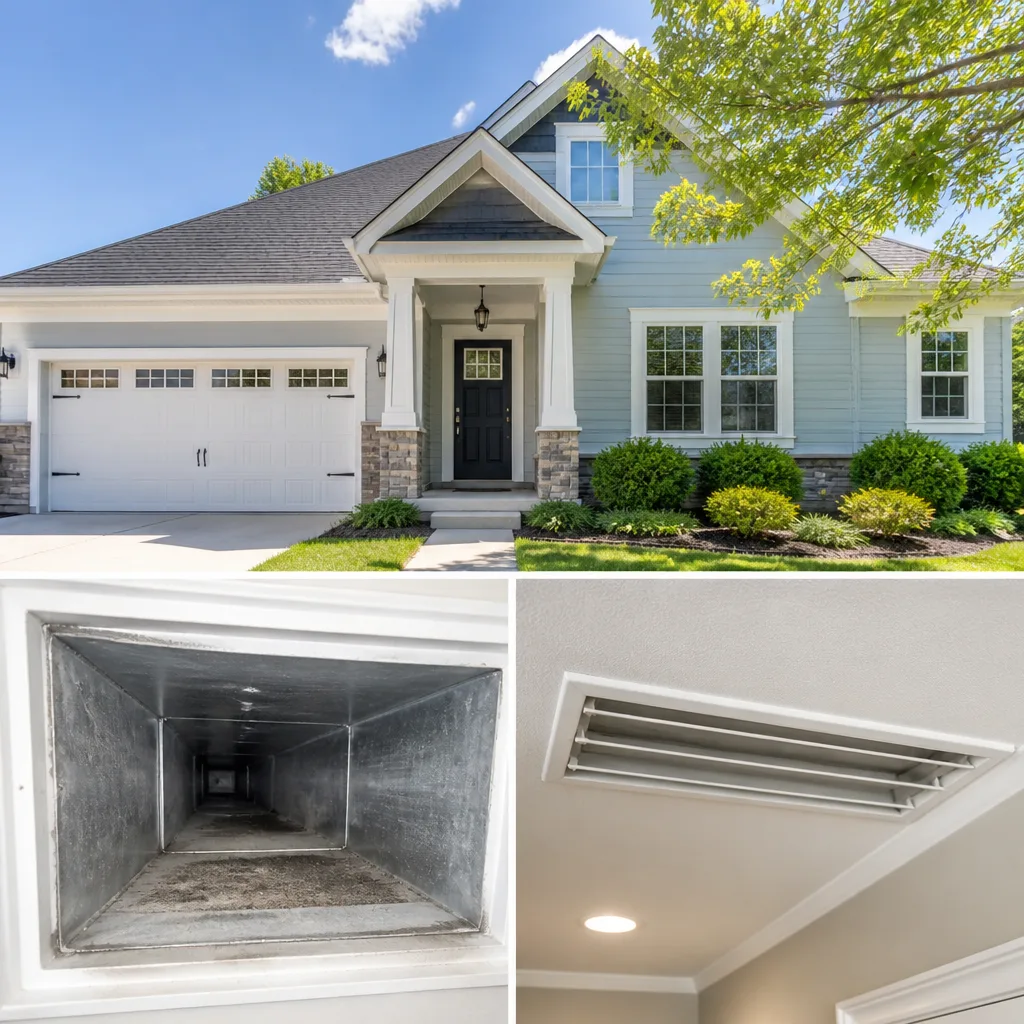 Whole-home duct cleaning
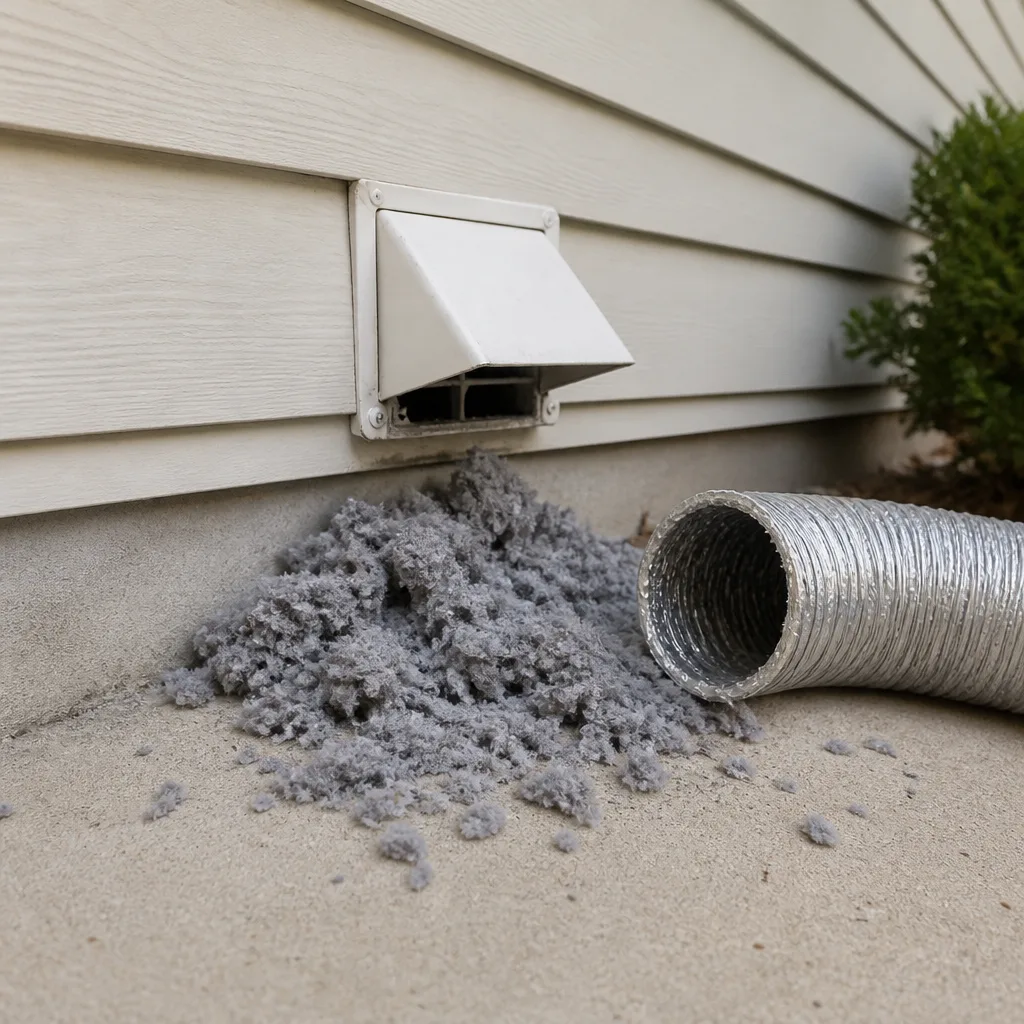 Dryer vent cleaning
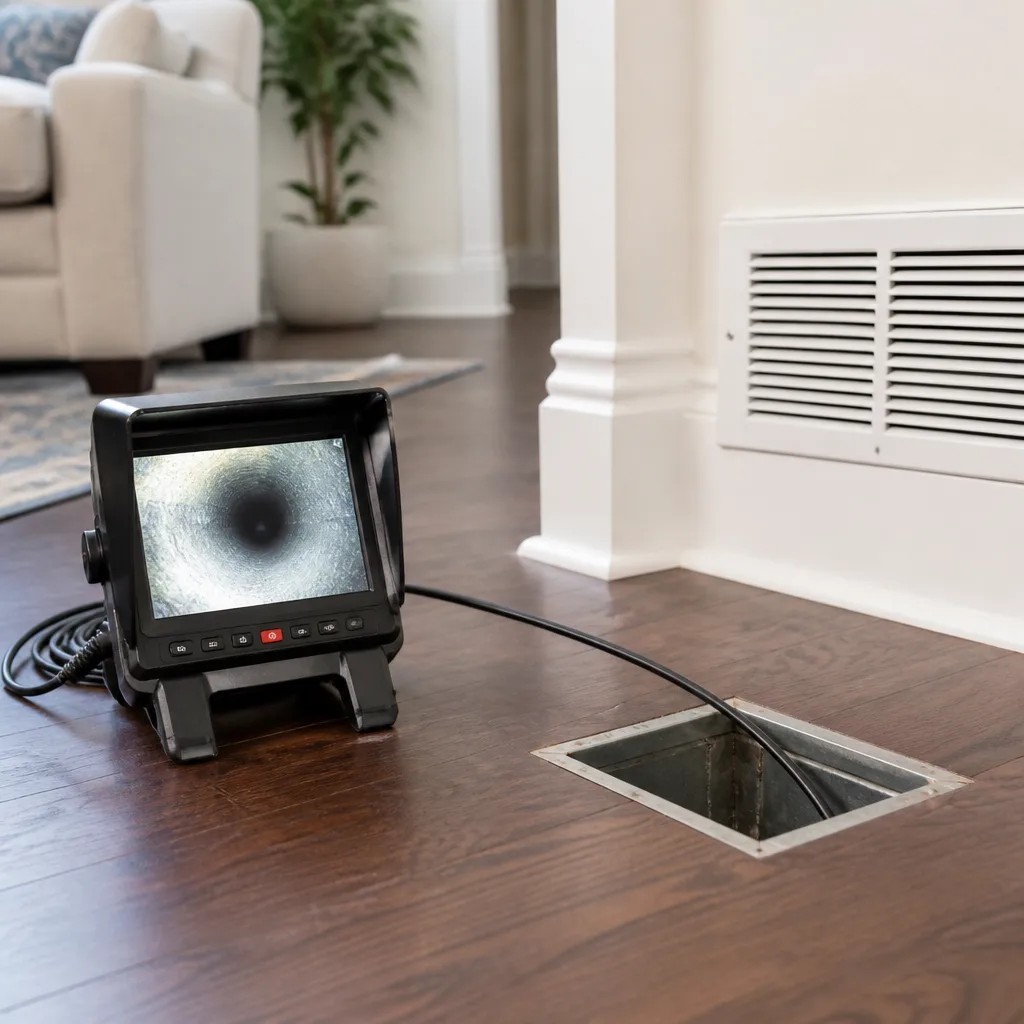 Camera inspection
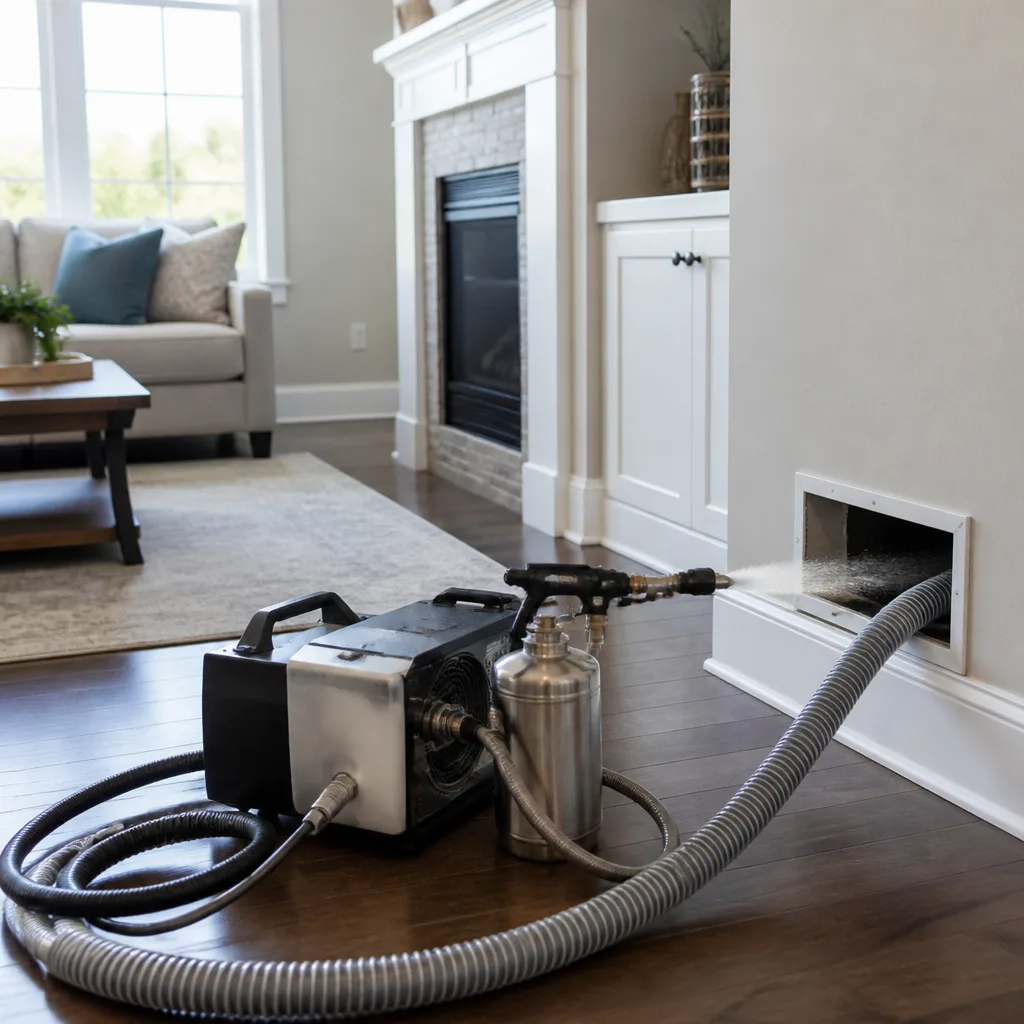 Sanitizing & deodorizing
Whole-system duct and dryer vent check with before-and-after photos - you see exactly what came out of your vents
That "$99 whole-house special" is a bait ad - the real number appears once they are in your hallway, or the "clean" is a shop-vac at the register. We photograph the inside of your ducts before and after instead.
Air Duct Cleaning Maintenance Checklist for Garden Grove Homeowners
Replacing a MERV-13 filter on schedule but never cleaning the duct lining is like mopping a floor while ignoring the drain. The filter catches what’s airborne, but buildup inside the metal stays put and keeps shedding into every room. Most homeowners treat duct cleaning as a one-time event, something you do once and forget. In Garden Grove, that approach misses the point. Duct health is a cycle: filter discipline, register inspection, HVAC checks, and periodic cleaning all feed each other. This guide lays out that cycle month by month, calibrated to the Santa Ana winds, the marine layer, and the wildfire smoke events that shape air quality here.
Quick Answer
A duct maintenance checklist for Garden Grove homeowners should cover filter changes every 1 to 3 months depending on pets and freeway proximity, quarterly inspection of register covers and return grilles, annual dryer vent cleaning, and professional duct cleaning every 3 to 5 years or after major smoke events. The schedule needs to flex around Santa Ana wind season in fall and the marine layer months in late spring and early summer.
Styles & brands we work with
- Whole-home duct cleaning
- Dryer vent cleaning
- Camera inspection
- Sanitizing & deodorizing
Table of Contents
- Why Duct Care Is a Cycle, Not an Event
- The Month-by-Month Garden Grove Checklist
- Filter Change Intervals by Home Type
- How to Inspect Register Covers and Return Grilles
- Benchmarking Whether Your Last Cleaning Is Holding
- Duct Specialist vs. HVAC Technician: Who Owns Which Task
- Dryer Vent Cleaning as a Fire-Safety Task
- When to Call a Professional
Why Duct Care Is a Cycle, Not an Event
A duct system is a closed loop that moves air thousands of times a day. Every cycle pulls air through the return grille, across the filter, through the blower, and out to the supply registers. Whatever the filter misses settles on the duct lining. Once it settles, normal airflow lifts it back into the stream. That’s the loop that makes one-time cleaning so misleading: the ducts get clean, then six months of unfiltered particulate redeposits on surfaces you can’t see.
In Garden Grove, the particulate load varies through the year. Santa Ana winds push dry, dust-laden air from the inland deserts down through Orange County, typically in fall. The marine layer months in late spring and early summer bring higher humidity, which can make dust cling to duct walls and register covers. Wildfire smoke events, whenever they happen, introduce fine ash that a standard filter can’t fully stop. Each of these conditions adds to the load inside the system.
That’s why we think of duct maintenance the way a mechanic thinks about oil changes: the interval depends on conditions, not just mileage. A home near the 22 or 405 corridors sees more airborne particulate than a home deeper into a residential tract. A house with two shedding dogs loads the filter faster than one with no pets. The checklist below reflects those variables.
When the cycle runs on schedule, you get three things: cleaner air, a system that doesn’t have to work as hard, and a lower risk of the kind of buildup that eventually requires more aggressive cleaning. If you want the full technical picture of what professional cleaning involves, our air duct cleaning page covers the equipment and process side.
The Month-by-Month Garden Grove Checklist
This is the spine of the guide. Print it, pin it to the garage wall, or set calendar reminders. Each task is small. Together they keep the system in reasonable shape between professional visits.
January through March (cooler, low-pollution stretch)
- Inspect the filter monthly and replace when visibly loaded. Cooler months usually mean lighter dust loading, but heating use increases air circulation.
- Vacuum register covers with a brush attachment. Focus on the supply registers in bedrooms and living areas.
- Check return grilles for lint and pet hair accumulation. Remove and wash the grille if it’s the removable type.
- Look for any new dust streaks around the edges of register frames, which can indicate loose duct connections.
April through June (marine layer months)
- Watch for condensation on register covers or duct surfaces. Higher humidity makes dust cling and can reveal sealing gaps.
- Replace the filter on a fixed schedule during this stretch, since humidity plus dust creates a heavier load.
- Check the outdoor condenser area and clear debris from around the unit. This is HVAC-side work, but it belongs on the same calendar.
- Schedule a professional inspection if you notice a musty or damp odor from the registers.
July through September (peak cooling and wildfire season)
- Replace the filter more frequently during any active wildfire smoke event, sometimes within weeks.
- Seal windows and run the system on recirculate if outdoor air quality is poor.
- Inspect return grilles weekly during smoke events for fine ash.
- Book a professional cleaning if you smell smoke indoors after an event has passed.
October through December (Santa Ana wind season)
- Expect the heaviest dust loading in the fall. Check filters every two weeks during windy stretches.
- Inspect register covers for dry dust streaks, which are common after Santa Ana events.
- Clean dryer vent lint after any heavy laundry season. Lint accumulates faster when the family is home more.
- Schedule an annual whole-system review if it’s been more than a year since your last professional visit.
Filter Change Intervals by Home Type
The filter is the cheapest line of defense and the one most people get wrong. Manufacturers print a general interval on the package, but the right interval in Garden Grove depends on how the house is built and where it sits. Here’s how we break it down.
Slab foundation homes
Slab foundations typically run ductwork through the attic or overhead, which means the ducts are exposed to attic heat. During hot months, that heat can bake dust onto duct surfaces. Filter intervals of 2 to 3 months are a reasonable default for a slab home with no pets. Check monthly and replace sooner if the filter face is visibly gray.
Raised foundation homes
Raised foundations often route ductwork through the crawlspace. That area holds moisture and dust differently from an attic, and in the marine layer months it runs damper. Filters in these homes can load faster on the return side, especially if the crawlspace has any open connections. Plan on 1 to 2 months during humid stretches.
Homes with pets
Pet hair is the fastest filter-loading variable after wildfire ash. One medium dog can cut your filter interval in half. Replace every 4 to 6 weeks if you’re seeing visible hair on the filter face at the one-month mark.
Homes near the 22 or 405 corridor
Freeway-adjacent homes see more airborne particulate from brake dust, tire wear, and road grit. A shorter interval (1 to 2 months) is the safe default. If your windows face the freeway and you open them for ventilation, that interval shrinks further.
MERV rating matters too. A MERV-13 filter catches more than a MERV-8, but it also loads faster and restricts airflow more. If your system wasn’t designed for the higher rating, you may need to balance filter capture with equipment pressure. This is a place where you want to know what your HVAC system actually supports before upgrading. A licensed HVAC technician can tell you the maximum MERV rating the blower and coil can handle without strain.
How to Inspect Register Covers and Return Grilles
You don’t need tools to spot early signs of duct problems. The covers and grilles are the system’s visible front door, and they tell you a lot about what’s happening behind the walls. Here’s what to look for.
Normal dust accumulation
- A thin, even film of light gray dust on the grille surface. This is expected and comes off with a damp cloth or a vacuum brush.
- Light gray dust on the fins of the supply registers. It builds up gradually over weeks.
- A small amount of lint on the return grille, especially in homes with pets or anyone who sheds heavily.
Signs worth a closer look
- Dark or black dust on register fins: this can indicate soot, oil residue, or filtration problems. Worth a call to a professional.
- Dust streaks radiating from the register edges: these usually mean air is escaping around the seam, which points to a loose duct connection.
- Visible debris inside the boot: if you can shine a flashlight into the register opening (with the system off) and see loose material, the duct lining is shedding.
- Musty or chemical odor: a persistent smell from the registers is a sign of moisture, mold, or degraded liner material. Stop using the system and get it inspected.
- Pest evidence: droppings, nesting material, or rodent access points near a register warrant immediate professional attention.
If you’re seeing any of the second group, don’t just wipe the cover and move on. Redeposited dust at that level usually points to a system-wide condition. A professional inspection is worth the visit. When the call comes, a trained eye with moisture readings, contaminate readings, and a boroscope pays for itself.
A simple routine:
- Turn off the system.
- Remove the grille covers if they’re the screw-mounted type (a screwdriver is enough).
- Shine a flashlight into the register opening at a 45-degree angle.
- Note the type and color of any visible material.
- Reinstall the covers, run the system, and check for any change in airflow or odor.
Benchmarking Whether Your Last Cleaning Is Holding
One question we hear often: how do I know my last cleaning actually worked? Cleaning is a service that most homeowners can’t see happening, so the temptation is to trust the receipt. A better approach is to benchmark performance over time. Here’s how.
- Airflow check: after a professional cleaning, note how strong the airflow feels at each supply register. Use a piece of tissue paper or a light object to gauge flow. Then check the same registers at the 3-month, 6-month, and 12-month marks. Airflow should stay consistent. If it drops noticeably, something is loading.
- Filter loading rate: if filters were lasting 3 months before cleaning and now need replacement every 6 weeks, something in the system is shedding more than it should.
- Register dust return: a small amount of new dust on register covers is normal. A thick layer returning within weeks is a sign of residual buildup in the duct lining.
- Visible debris in the boot: this is the clearest sign. A properly cleaned and sealed system shouldn’t have visible debris in the register boot months later.
- Documentation: a professional cleaning should include before-and-after photos. Compare them to your ongoing observations.
When we do a full-system cleaning, our technicians use Rotobrush rotary brush agitation combined with Nikro extraction, which produces a clean duct surface rather than just a cleared air stream. We also use Abatement Technologies negative-air containment to keep dust out of living spaces during the work, the same approach used in remediation projects. The result is a system that starts clean, and the benchmark work above tells you how well it’s holding.
If your last cleaning happened without documentation, or if you’re not sure what equipment was used, a benchmark inspection is a reasonable starting point. When we clean a system, we photograph the ducts before and after, so you have evidence of the work rather than a claim on a receipt.
Duct Specialist vs. HVAC Technician: Who Owns Which Task
Not all maintenance work belongs to the same person. The duct specialist cleans and seals the air distribution system. The HVAC technician maintains the mechanical components that move and condition the air. There’s some overlap in the middle, but knowing who owns what saves time and money.
The duct specialist owns:
- Cleaning the interior of all duct runs, including trunk lines and branch lines
- Cleaning and sanitizing the air handler cabinet interior
- Inspecting and repairing duct seams, joints, and connections
- Diagnosing duct liner degradation and recommending repair or sealing
- Dryer vent cleaning and inspection
- Identifying moisture or contamination that requires broader remediation
The HVAC technician owns:
- Refrigerant checks and charging
- Compressor, condenser, and evaporator diagnostics
- Blower motor inspection and service
- Electrical component testing
- Thermostat programming and calibration
- System controls and safety switch checks
The overlap zone:
The air handler cabinet sits in both worlds. Duct specialists clean and sanitize the cabinet interior as part of a full-system cleaning; HVAC technicians service the blower and coil inside the same cabinet. A good maintenance plan has both people involved at the right intervals. Filter changes and register inspection are homeowner-level tasks that keep the system in reasonable shape between professional visits.
If your ducts need repair or sealing, that’s a specialist’s job, not a general handyman’s. Sealing a duct with the wrong tape or mastic introduces its own problems. We do HVAC cleaning and duct repair as part of the same visit so the system stays consistent from one end to the other.
Dryer Vent Cleaning as a Fire-Safety Task
Air duct maintenance often stops at the supply and return side. That leaves a gap: the dryer vent is a duct too, and it’s the one most directly linked to fire risk. Lint accumulates in the dryer vent even faster than dust accumulates in the HVAC ducts, and lint is highly flammable. A clogged vent also makes the dryer run longer, which raises operating temperatures on both the dryer and the vent.
In Garden Grove homes, where many laundry areas sit against exterior walls or in interior closets, the vent run can be longer than you’d expect. A long run means more places for lint to catch. This is why we treat dryer vent cleaning as a core service, not an add-on.
Signs your dryer vent needs attention:
- Clothes take longer than one cycle to dry
- The dryer feels hot to the touch on the outside
- Lint accumulates around the dryer door or lint trap faster than usual
- You can’t remember the last time the vent was cleaned
- The exterior vent flap doesn’t open freely when the dryer runs
Cleaning the vent removes the lint that builds up inside the run and around the dryer connection point. It’s a short visit and it’s one of the simplest ways to lower fire risk in the home. When we clean a dryer vent, we also check the connection point and the exterior hood to make sure the path is clear and properly sealed.
The maintenance cycle that keeps HVAC ducts healthy is the same cycle that keeps the dryer vent safe. Both tasks belong on the same calendar.
Common Mistakes to Avoid
- Skipping filter changes between cleanings. A clean duct system still loads filters, and a loaded filter pushes particulate back into the ducts. The cycle only works if filter changes actually happen on schedule.
- Using a higher MERV filter than the system supports. A MERV-13 sounds better than a MERV-8, but if the blower isn’t designed for it, airflow drops and the system strains. Check with an HVAC technician before upgrading.
- Wiping register covers and assuming the ducts are clean. The cover is a surface; the duct lining is where the buildup lives. Wiping the cover is housekeeping, not cleaning.
- Ignoring the dryer vent. The dryer vent is the highest fire-risk duct in the house, and it’s routinely forgotten because it’s not part of the HVAC system. Get it on the same calendar.
- Hiring the cheapest coupon and getting consumer-grade equipment. A shop-vac and a coupon don’t clean a duct system. Ask what equipment is used, whether containment is deployed, and whether you’ll get before-and-after photos. Professional systems like Rotobrush and Nikro are the standard for a reason.
- Assuming a cleaning is permanent. Cleaning is a reset, not a wall. The cycle needs maintenance between visits.
- Letting a musty smell go unexplained. A persistent musty odor from the registers may be moisture or mold inside the system. It’s worth a professional look rather than a quick spray.
The most common mistake we see in Garden Grove is treating duct care as a single transaction. The second most common is hiring on price alone and getting consumer equipment rather than a full-system scope. Both are avoidable with a little process knowledge.
See the difference
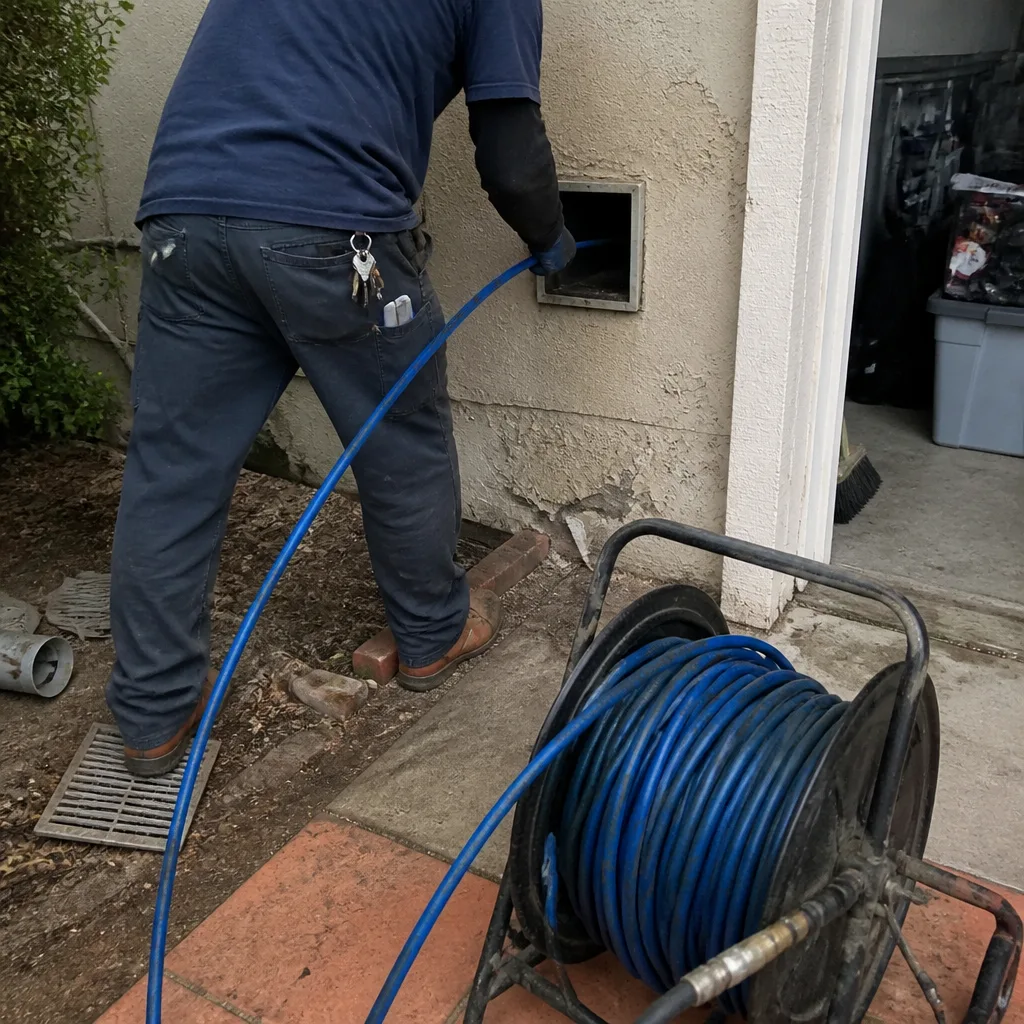 Before
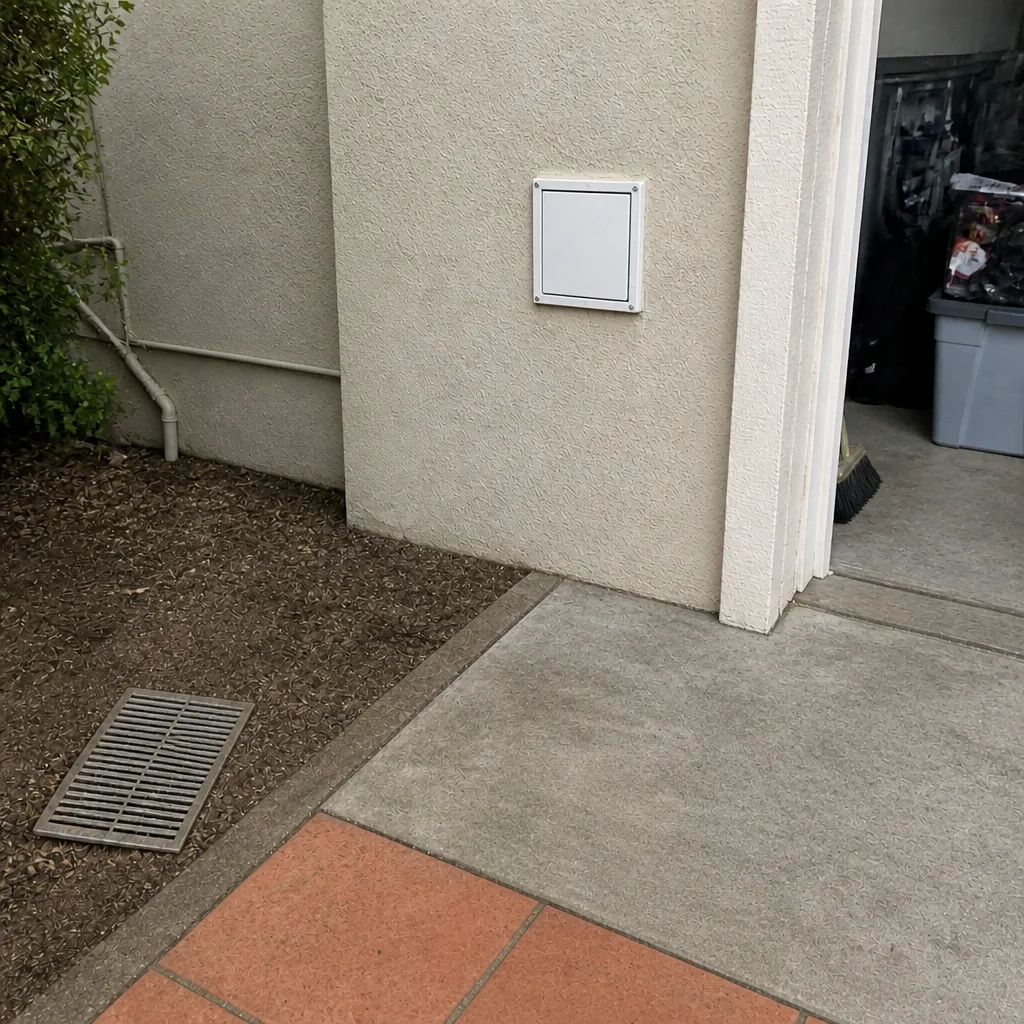 After
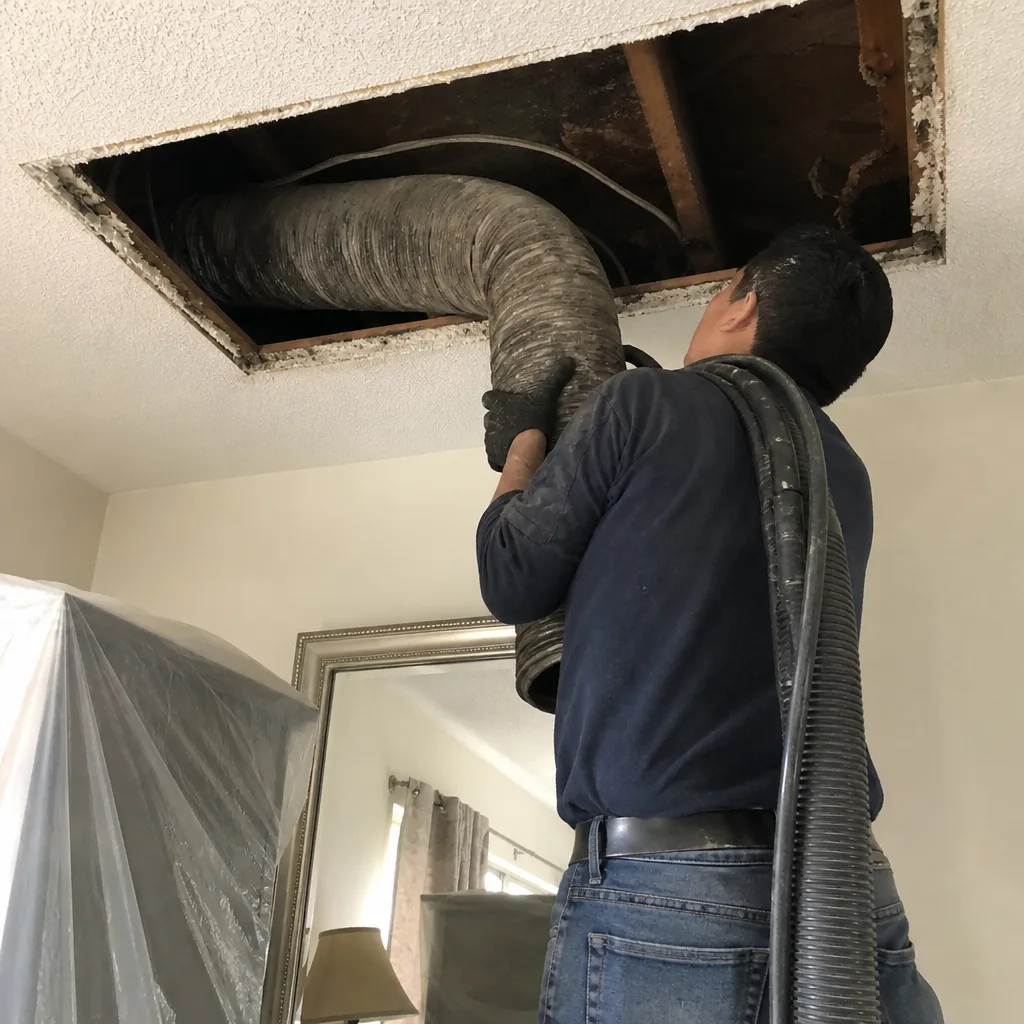 Before
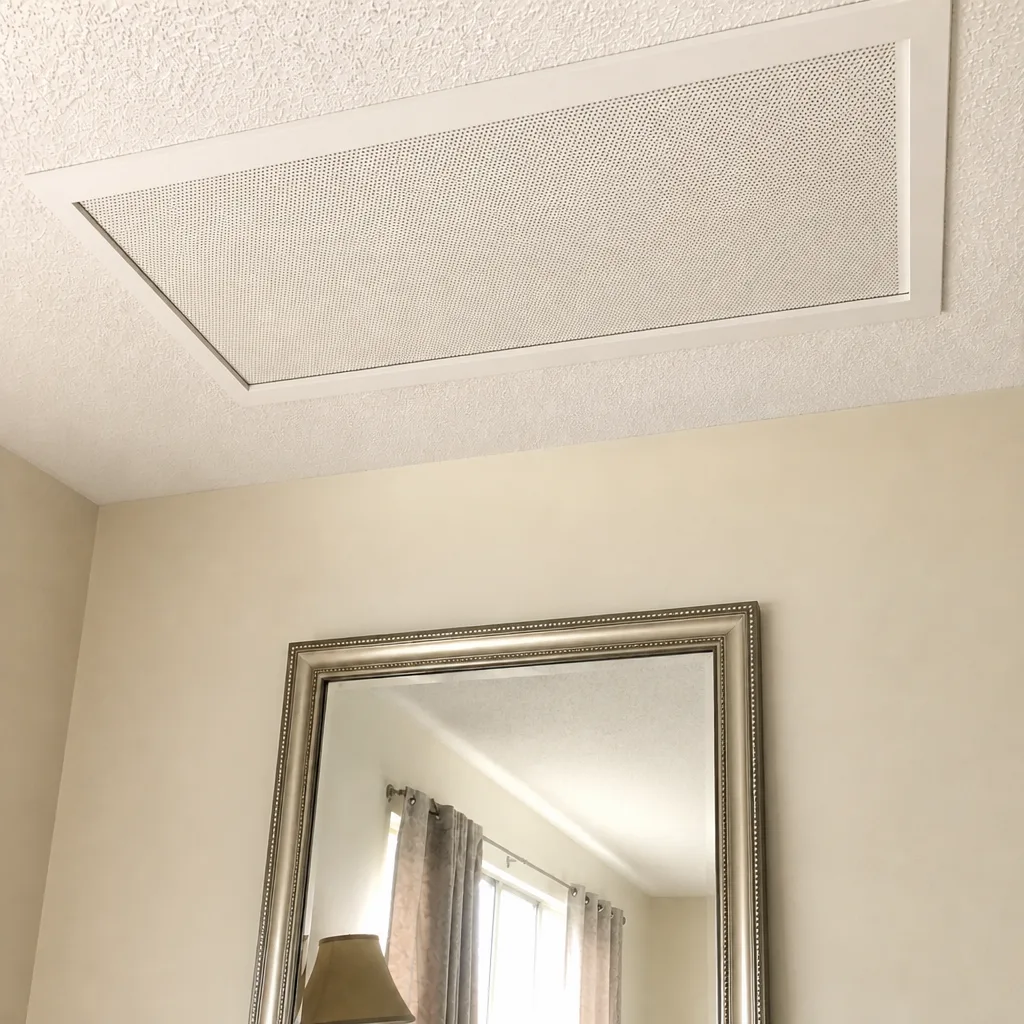 After
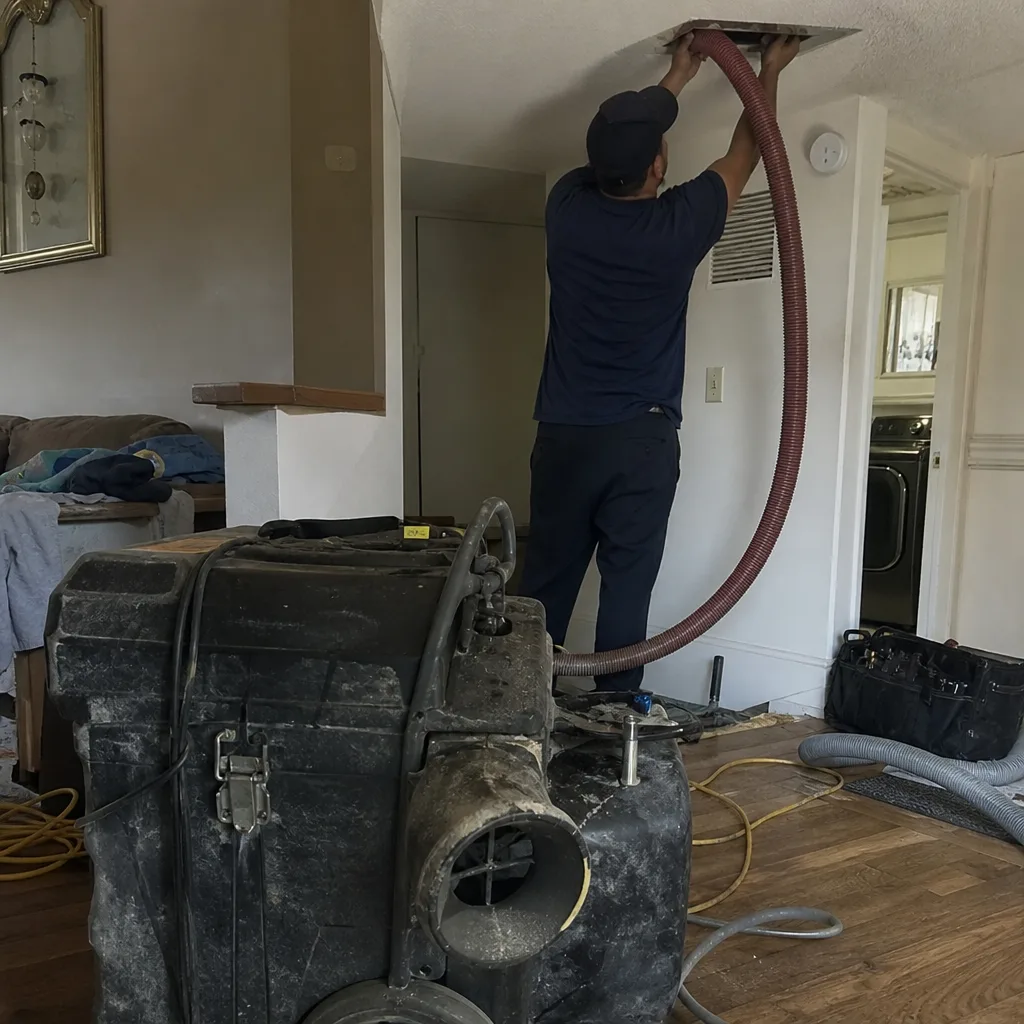 Before
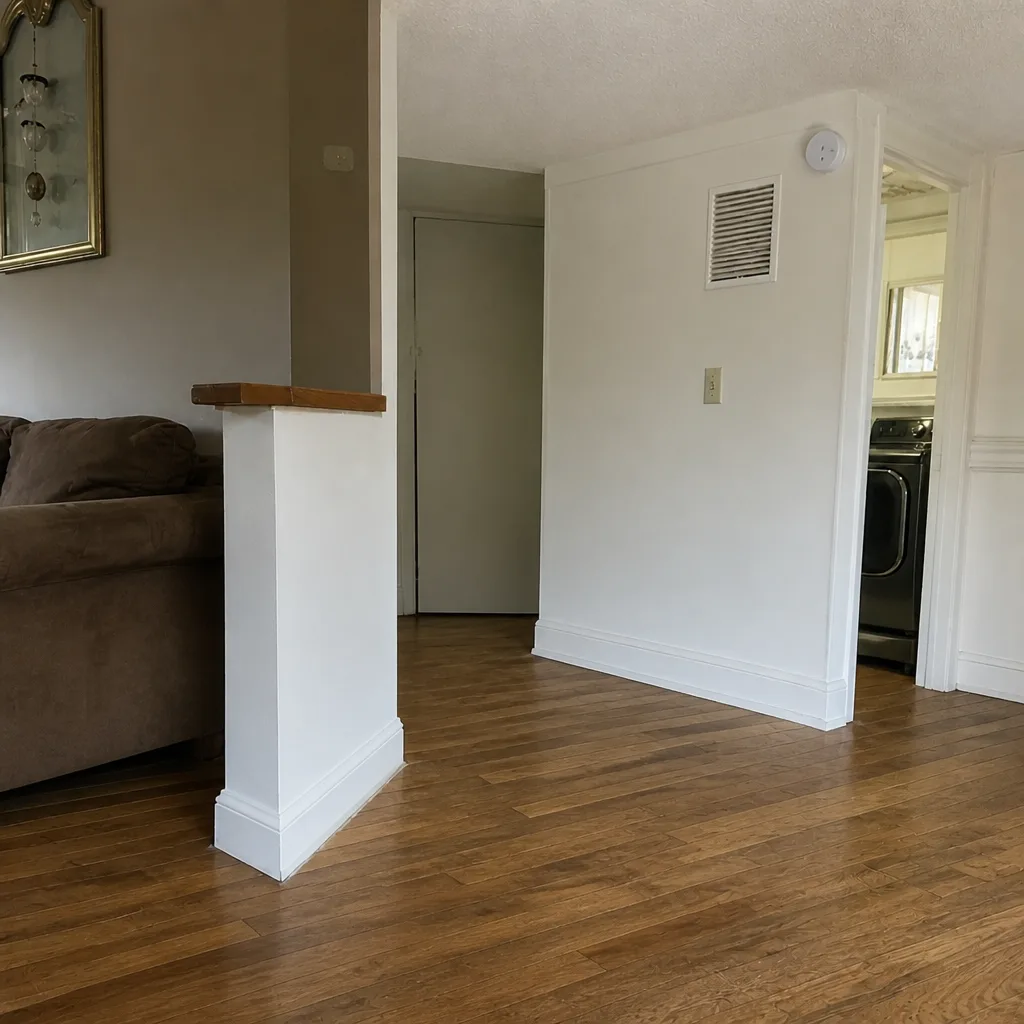 After
When to Call a Professional
Some tasks belong on your calendar. Others need a specialist. Call a professional when you see any of the following:
- Visible debris inside a register boot that returns after cleaning
- Persistent musty or chemical odor from any register
- Noticeable airflow drop at multiple registers
- Dust streaks radiating from register frames or duct seams
- Recent wildfire smoke infiltration that leaves an indoor odor
- Pest evidence near registers or in the air handler area
- It’s been more than 3 to 5 years since your last professional cleaning
- You can’t remember the last dryer vent cleaning
Garden Grove Air Duct Cleaning Co offers free estimates in Garden Grove – call (844) 686-1735. We answer 24/7. Fast dispatch from 7am to 7pm, Sunday through Friday. Our technicians have up to 14 years of experience, and we use professional-grade Rotobrush, Nikro, and Abatement Technologies equipment on every whole-system job.
Frequently Asked Questions
Most Garden Grove homes should have professional duct cleaning every 3 to 5 years, with adjustments for pets, freeway proximity, and wildfire smoke events. Homes near the 22 or 405 corridors often benefit from the shorter end of that range. Filter changes happen far more frequently, typically every 1 to 3 months. Call (844) 686-1735 for an exact quote – estimates are free.
Air duct cleaning in Garden Grove typically runs between $350 and $700 for a standard single-family home, depending on the number of registers, system size, and whether repair or sanitizing is included. Homes with multiple zones, heavy contamination, or additional services like dryer vent cleaning will run higher. We give one flat price per system agreed before work starts, so there’s no surprise invoice at the end. Call (844) 686-1735 for an exact quote – estimates are free.
Low quotes usually reflect consumer-grade equipment, no containment, or a per-vent price that climbs on site. A shop vacuum and a rotary brush attachment don’t clean a duct lining the way a professional Rotobrush and Nikro setup does, and no containment means dust redistributes through the house. We use Abatement Technologies negative-air containment on every whole-system job and give you before-and-after photos so you can verify the work. Call (844) 686-1735 for an exact quote – estimates are free.
Ask for before-and-after photos of your own ducts, not a stock image. A professional cleaning should also include documentation of what was cleaned, what was repaired or sealed, and what equipment was used. We photograph the system before and after every job so you have visual proof. Call (844) 686-1735 for an exact quote – estimates are free.
It can help by removing accumulated dust, pollen, pet dander, and wildfire ash from the system, which reduces what gets recirculated into the air. Duct cleaning isn’t a treatment for allergies, but a cleaner system tends to reduce airborne particulate overall. Homes with allergy-sensitive residents often pair cleaning with sanitizing and a filter upgrade to a MERV rating the system supports. Call (844) 686-1735 for an exact quote – estimates are free.
Yes, we recommend it. Both are part of the same maintenance cycle, and pairing them means one visit rather than two. Dryer vent cleaning also addresses one of the leading causes of residential fires, so it belongs on the same calendar as your HVAC duct work. Call (844) 686-1735 for an exact quote – estimates are free.
Every 3 to 5 years is a reasonable default for most Garden Grove homes, but the interval shortens with pets, freeway proximity, recent wildfire smoke events, recent remodeling, or a move into a home with unknown service history. If you’re not sure, an inspection answers the question faster than guessing. Call (844) 686-1735 for an exact quote – estimates are free.
The Bottom Line
Duct maintenance in Garden Grove is a cycle, not a transaction. Filter changes, register inspections, dryer vent cleaning, and periodic professional cleaning all feed each other. The Santa Ana winds, marine layer months, and wildfire smoke events each raise the load at different points in the year, so the checklist needs to flex. If you take one thing from this guide, make it the calendar: a system that’s checked on schedule performs better than one that’s cleaned once and forgotten. When it’s time for a professional visit, Garden Grove Air Duct Cleaning Co is here to help. Call (844) 686-1735 for a free estimate. We answer 24/7. Fast dispatch from 7am to 7pm, Sunday through Friday.
Written by the team at Garden Grove Air Duct Cleaning Co.