
Last updated November 24, 2026
 Whole-home duct cleaning
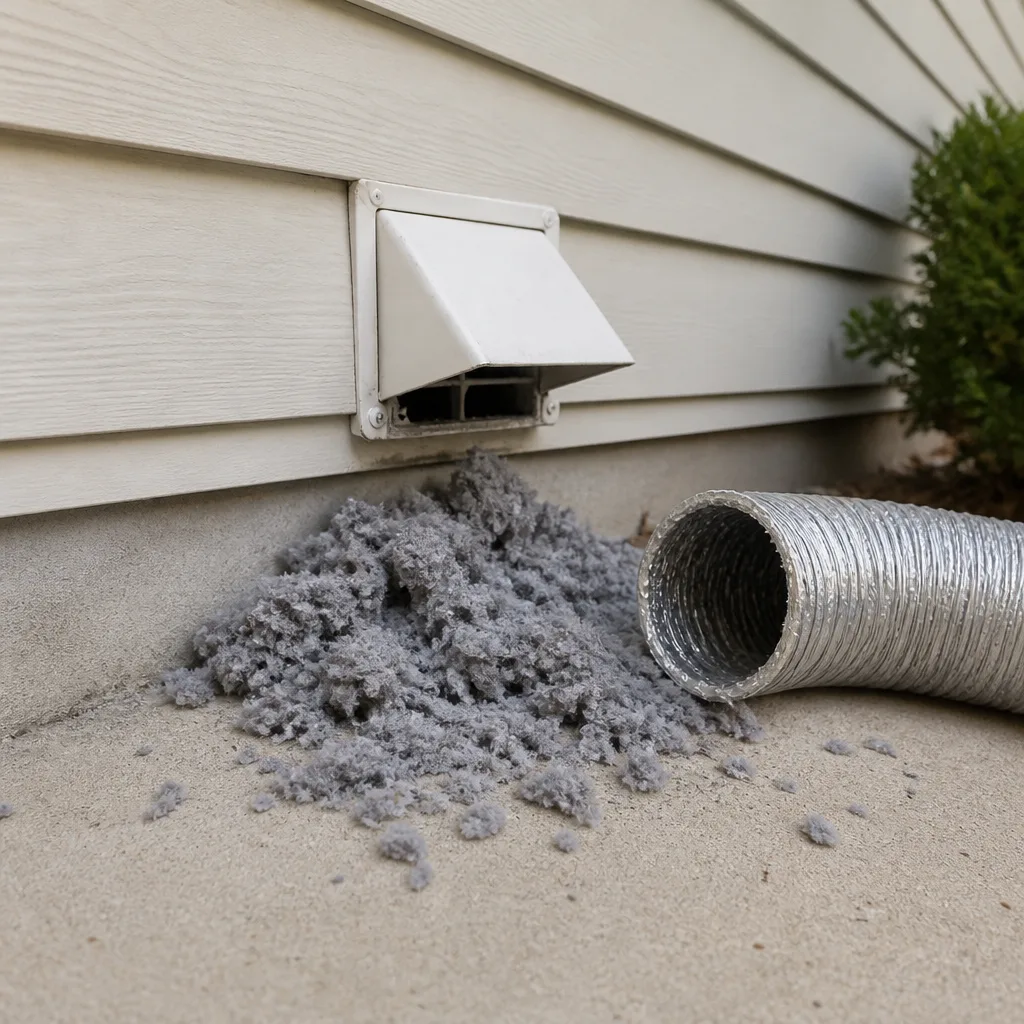 Dryer vent cleaning
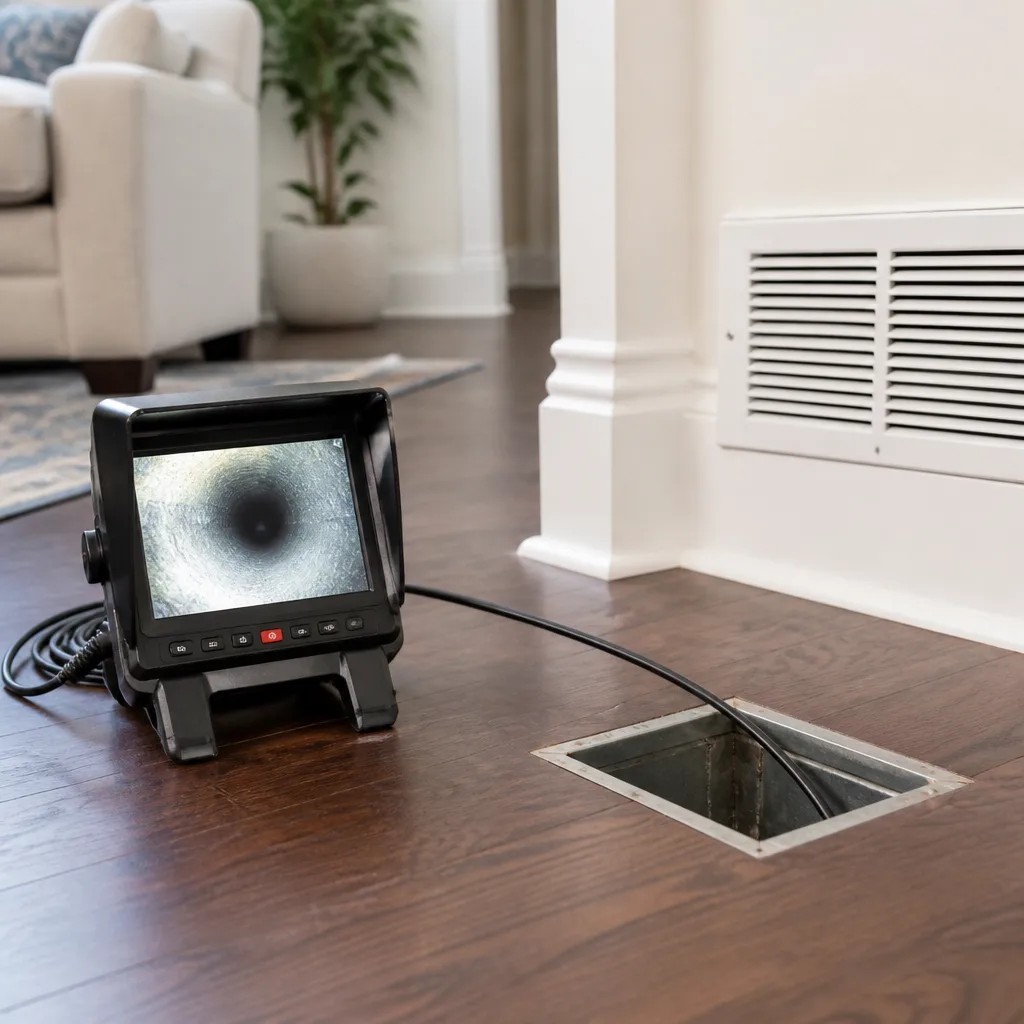 Camera inspection
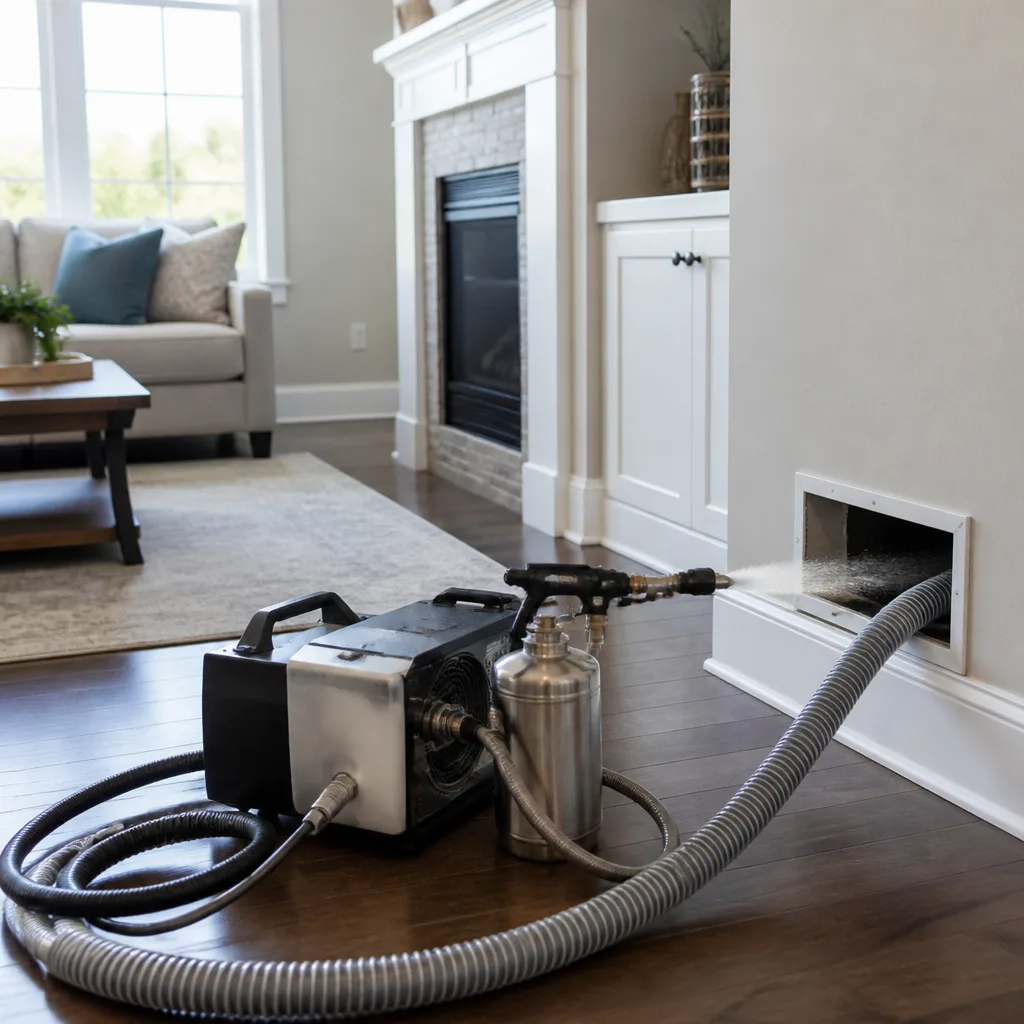 Sanitizing & deodorizing
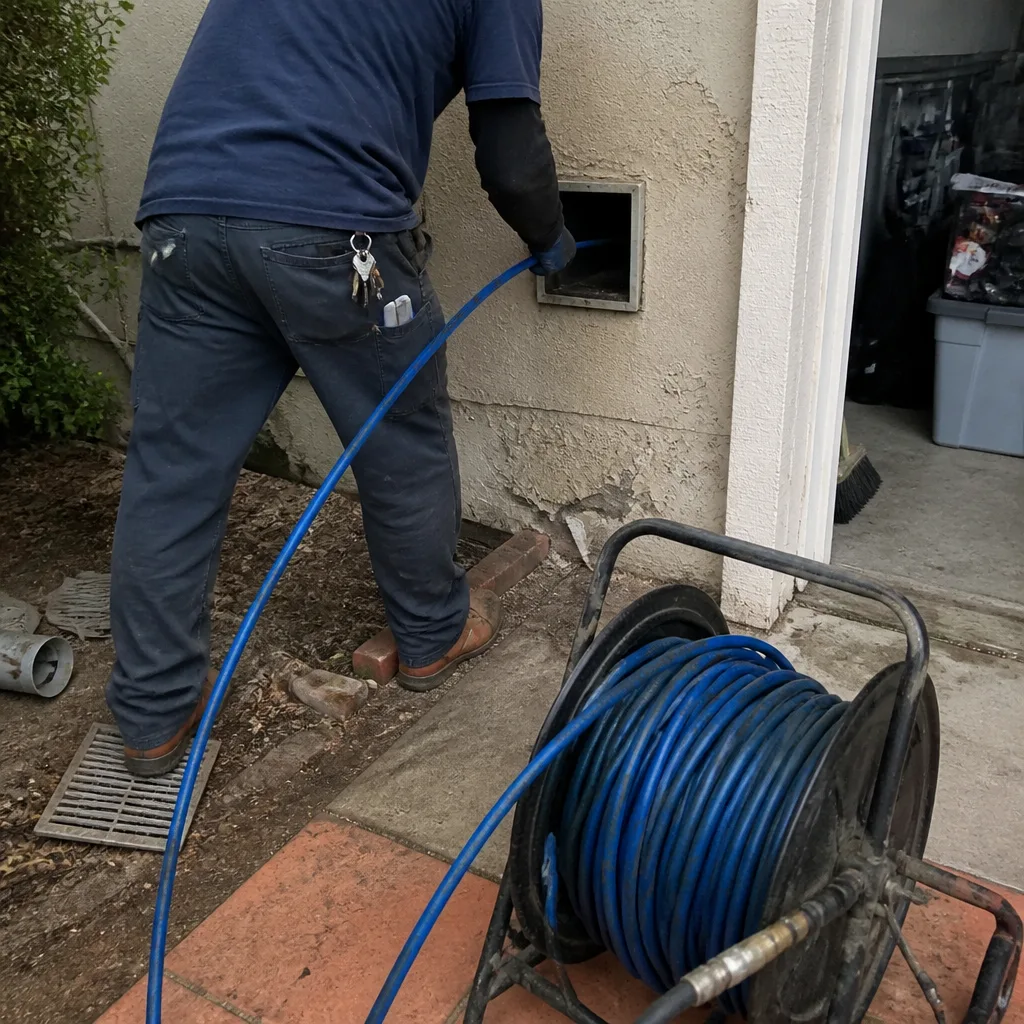
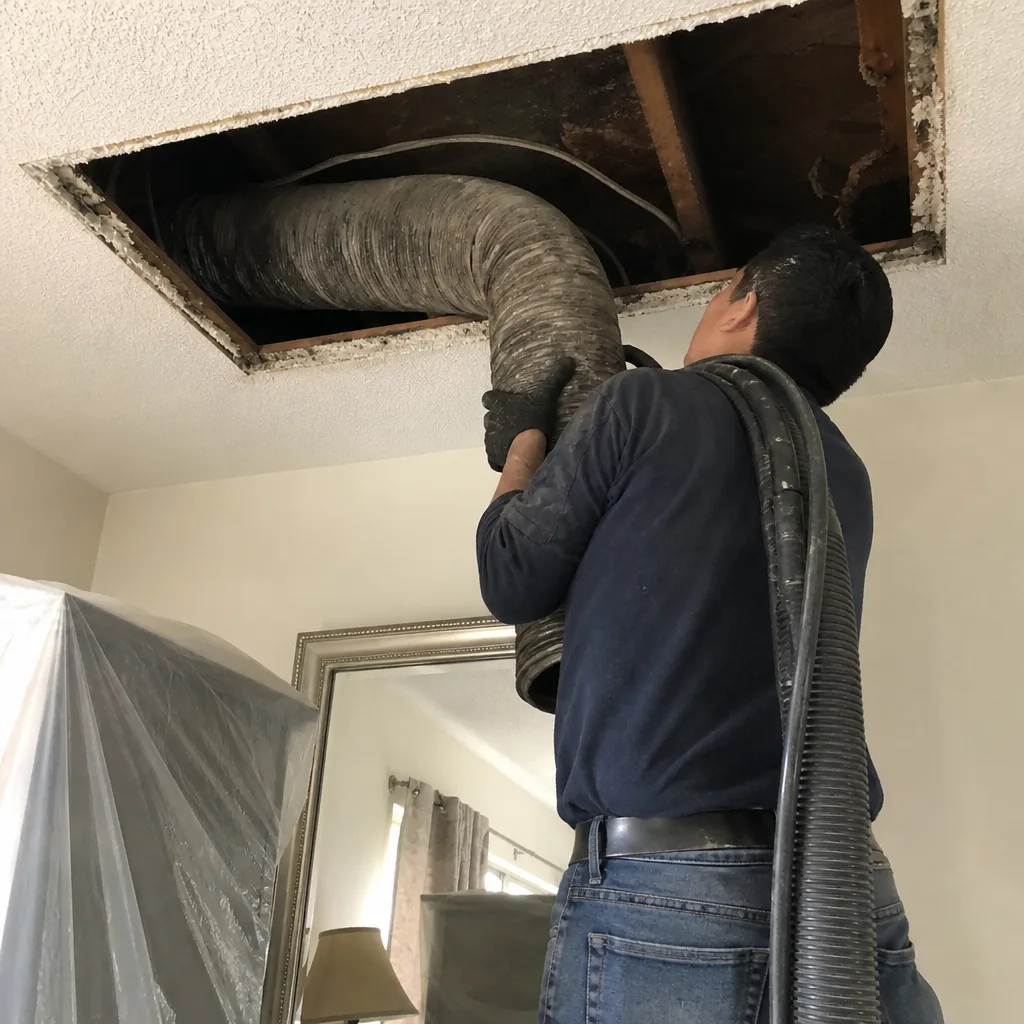
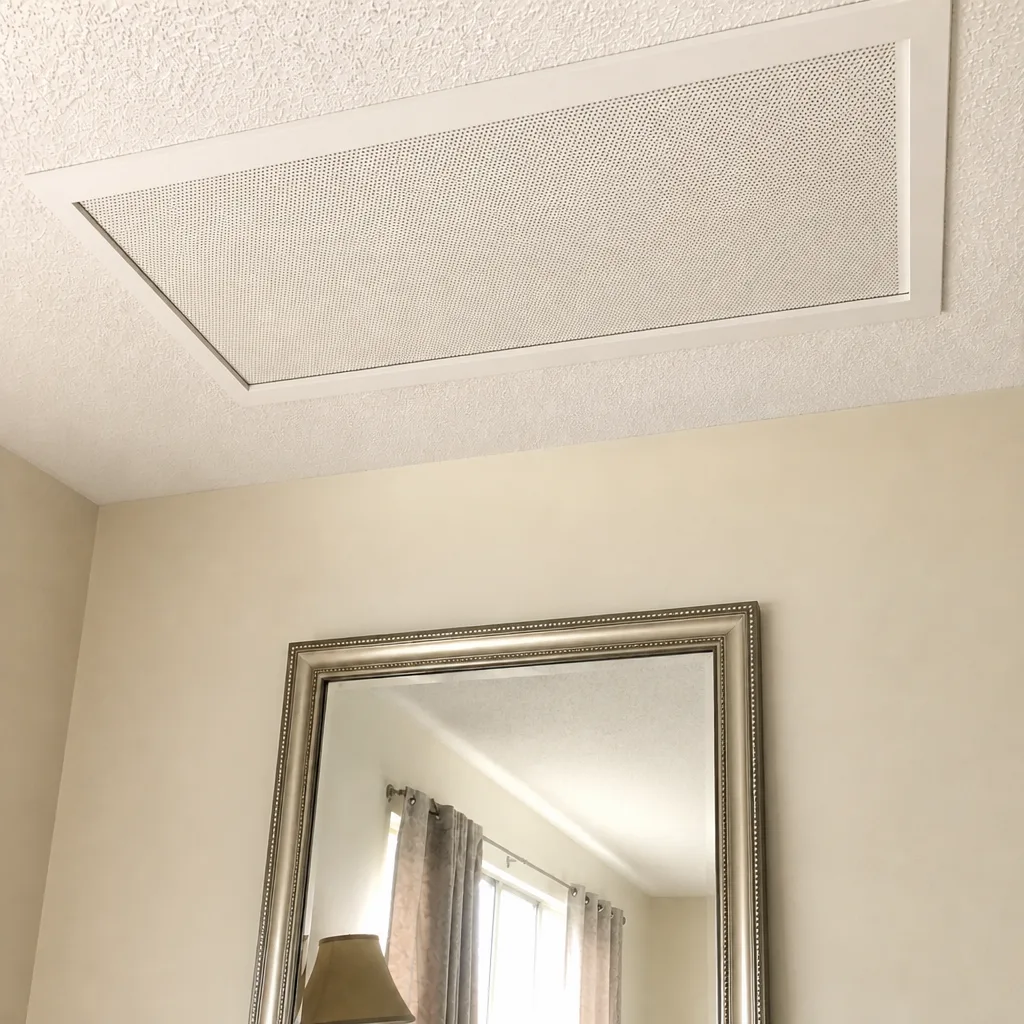
Whole-system duct and dryer vent check with before-and-after photos - you see exactly what came out of your vents
That "$99 whole-house special" is a bait ad - the real number appears once they are in your hallway, or the "clean" is a shop-vac at the register. We photograph the inside of your ducts before and after instead.
Air Duct Cleaning Warning Signs: A Garden Grove Homeowner’s Reference Guide
A sudden increase in dust on horizontal surfaces after you run the AC is not “just dust season.” It often means duct lining has started shedding, and shedding is a different problem from ordinary surface soiling. Surface dust wipes away and stays away for a while. Shedding keeps producing new dust from the inside of the system, so the same shelf you cleaned last week is gray again by Tuesday. Misreading that difference is the most common way Garden Grove homeowners either waste money on a cleaning that doesn’t solve anything or wait until a small tear becomes a full duct replacement. This guide teaches you to read the signals your ducts are already giving you: what’s normal, what’s deterioration, what odors mean, how to test airflow room by room, and what to inspect after a wildfire smoke event or a pest intrusion.
Quick Answer
Active duct deterioration usually shows up as recurring dust that returns within days, visible fiberglass fibers or liner fragments at registers, musty or burning odors when the system runs, and uneven airflow between rooms. Normal dust re-accumulation takes weeks, not days, and doesn’t produce fibers or smells. If you notice fibers, odors, or a room that never gets air, that’s a sign to have the system inspected rather than simply cleaned.
Styles & brands we work with
- Whole-home duct cleaning
- Dryer vent cleaning
- Camera inspection
- Sanitizing & deodorizing
Table of Contents
- Normal Dust vs. Active Duct Deterioration
- Fiberglass Liner Shedding and Flex Duct Separation
- Odor Diagnostics: What Each Smell Implicates
- The Room-by-Room Tissue Test for Airflow Asymmetry
- Visible Mold at Registers: Why the Register Isn’t the Source
- Post-Event Inspections: Smoke, Pests, and HVAC Repairs
- The Dryer Vent Signal Homeowners Miss
- What a Technician Actually Investigates
Normal Dust vs. Active Duct Deterioration
Every home has some dust. Garden Grove sits in a mild, dry climate where windows stay open more months of the year than in most of the country, and that alone moves a steady supply of outdoor particulate indoors. The question isn’t whether you’ll see dust. It’s whether the dust is being replenished from inside the duct system.
Here’s how to tell the difference without any equipment:
- Timing. Normal dust builds up over two to four weeks on a shelf or a TV stand. Dust that reappears within 48 to 72 hours of wiping points to an active source, often loose duct lining or a gap pulling air from an attic or crawl space.
- Texture. Household dust is soft and gray. Fiberglass liner particles feel slightly gritty and can glint in direct light. If you see short, fine fibers on a dark surface, that’s liner material, not dust.
- Location. Dust concentrated under or near specific supply registers, rather than evenly spread through the house, suggests the problem is in the branch duct serving those rooms.
- Pattern. Dust that’s worse only when the system is running, and settles when it’s off, is being delivered by the HVAC. Dust that’s constant regardless of the system comes from outdoors or from occupants.
This distinction matters because cleaning a system with failing liner only removes the debris that’s already loose. It doesn’t stop the liner from continuing to shed. A proper inspection looks at the liner’s condition, the joints, and the connections before anyone decides whether cleaning alone will solve the problem or whether Garden Grove Air Duct Cleaning Co needs to repair and seal sections first.
Fiberglass Liner Shedding and Flex Duct Separation
Most residential duct systems in Garden Grove homes fall into two categories: rigid metal ductwork lined on the interior with fiberglass acoustic insulation, and flexible duct (often called flex duct) with a plastic inner liner wrapped in insulation. Both have failure modes that produce the exact dust pattern described above.
Fiberglass liner shedding
Interior liner is bonded to the metal with adhesive. Over years of heating and cooling cycles, that bond weakens, especially near joints and at the plenum where temperatures swing most. Once the adhesive fails, the liner surface starts to break down and release fibers into the airstream. Those fibers end up on your furniture, in your return filter, and in the air you’re breathing. Liner shedding is not something a filter upgrade fixes, because the source is downstream of the filter.
Flex duct separation
Flex duct connects at each register boot and at the main trunk with tape, mastic, or a collar. Those connections can pull apart, particularly when ductwork runs through an attic that hits high summer temperatures. A separated joint doesn’t just lose air pressure. It pulls unfiltered attic air, insulation particles, and whatever else is up there directly into the room. That’s why a room fed by separated flex duct often shows heavier dust than the rest of the house.
Debris intrusion from attic penetrations
Any hole cut in the attic floor or ceiling for wiring, plumbing, or recessed lights is a potential entry point for loose insulation and dust. In Garden Grove, where many homes have blown-in attic insulation, a single unsealed penetration near a return can pull insulation fibers into the system continuously.
What a technician should check here: liner condition at the plenum and at the first few joints, the physical attachment of every flex run you can reach, and the sealing around any attic penetration near a return. Repair and sealing often have to come before or alongside cleaning, which is why we handle HVAC cleaning as one scope rather than two separate visits.
Odor Diagnostics: What Each Smell Implicates
Odors are the most reliable diagnostic signal a homeowner has, because each type points to a different part of the system and a different cause. Don’t treat “the house smells when the AC comes on” as one problem. It’s three different problems depending on what the smell is.
Musty odor
A musty, damp, basement-like smell that appears when the system starts points to moisture somewhere in the duct path. The usual suspects are condensate that isn’t draining properly, a wet evaporator coil, or ductwork in a humid crawl space or attic that’s picking up moisture. Where there’s persistent moisture in a dark duct, biological growth follows. The fix is to find and correct the moisture source first, then clean and sanitize the affected sections. Cleaning without fixing the moisture just resets the clock.
Burning or electrical odor
A hot, sharp, or burning-plastic smell is the one odor that warrants shutting the system off. It suggests heat contact: a failing blower motor, an overheated heating element, or wiring in contact with something it shouldn’t be. This is an electrical and safety issue rather than a duct cleaning issue. A duct technician should flag it, but the diagnosis belongs to a qualified HVAC or electrical professional, and the system shouldn’t run until someone has looked at it.
Stale or flat odor
A stale, dusty, closed-up smell without any moisture character is typical of biological and particulate accumulation, especially in homes that were vacant for a season or that run the fan constantly. It’s the least urgent odor category, but it’s a clear indicator that the system is carrying a heavy biological load and is a good candidate for cleaning followed by an air quality treatment.
In our experience, the odor category tells you more in thirty seconds than an hour of guessing. If you can describe the smell precisely, you’ve already narrowed the cause considerably. Air sanitizing after cleaning, and whole-home filtration systems from brands like Honeywell or Aprilaire where appropriate, address the residual load once the source has been corrected.
The Room-by-Room Tissue Test for Airflow Asymmetry
Uneven airflow is one of the earliest warning signs, and you can measure it with a tissue and ten minutes.
- Turn the system fan to ON so it runs continuously without heating or cooling.
- Hold a single-ply tissue flat against each supply register, one at a time. Note how far it’s pushed away and how steady the movement is.
- Hold the tissue against each return grille and note the pull.
- Write down the results room by room. Note any register that barely moves the tissue, flutters it intermittently, or blows noticeably harder than the rest.
- Walk to each room and hold your hand at the register for a few seconds to feel for temperature consistency.
What the results mean
A register that barely moves a tissue while others push it clearly is delivering a fraction of the air it should. That points to one of a handful of causes: a disconnected or crushed flex run, a damper that’s closed or stuck, a branch duct that’s collapsed internally, or a design imbalance in the system. A register that flutters rather than blows steadily often means the duct is partially blocked or leaking at a joint downstream.
The important nuance is that uneven airflow doesn’t automatically mean the HVAC is undersized. Airflow asymmetry within one system, where some rooms are strong and others are weak, points to duct condition. Consistent weakness across every register points more toward blower or system capacity, which is an HVAC diagnosis, not a duct diagnosis. Cleaning and sealing ducts in a Garden Grove home with good system capacity but weak delivery in two or three rooms usually produces the most noticeable improvement.
Visible Mold at Registers: Why the Register Isn’t the Source
Finding dark speckling or a fuzzy patch on or around a supply register is a common panic moment. In most cases, the register face itself isn’t the problem. The register is the visible end of a long, dark, often cool duct run, and it’s simply where the evidence shows up.
Here’s what’s actually happening. Supply registers sit in cool air for extended periods. If there’s any humidity in the airstream, condensation forms on the coolest surface: usually the register diffuser, the boot, or the first stretch of flex duct behind the wall. That moisture, plus dust, is all biological growth needs. The register face is the exposed evidence of a condition that starts behind the wall.
A proper investigation looks further back:
- The inside of the boot and the first two feet of duct behind the register.
- The evaporator coil and drain pan, since a clogged drain pan is a chronic moisture source feeding the whole supply side.
- The return path and filter housing, which is the humid air entry point in many homes.
- The attic or crawl space runs, where high humidity and cooler duct surfaces meet.
Wiping the register face, a common instinct, does nothing to the source. What resolves it is fixing the moisture and treating the system with proper containment. Using Abatement Technologies negative-air equipment keeps spores from spreading through the home during that work, which is one reason containment matters more in a mold situation than it does in routine cleaning.
Post-Event Inspections: Smoke, Pests, and HVAC Repairs
Some duct problems aren’t gradual. They arrive with a specific event, and they need inspection on a completely different timeline than the annual or multi-year review we’d otherwise recommend.
After a wildfire smoke event
Smoke particulate is fine enough to pass through standard filters and settle on duct walls, and it leaves an odor that doesn’t clear with ventilation alone. After a significant smoke event affecting the Garden Grove area, the right sequence is: change the filter, run the fan on low to let the filter do its job first, then have the duct system inspected. If there’s a visible layer of ash or a persistent smell after a week, cleaning and a sanitizing treatment are warranted. Don’t assume a filter change is enough for heavy smoke exposure.
After a pest intrusion
Rodents and insects in attics frequently leave droppings, nesting material, and debris in or around duct runs, especially where flex duct has separated. This is one of the more serious conditions because pest debris carries a contamination risk that simple cleaning can miss. The right response involves removing visible debris, sanitizing the affected sections, and then sealing the entry point. If the entry point isn’t sealed, everything comes back.
After HVAC repairs that required duct access
Any repair that opens the duct system, whether it’s a coil replacement, a blower change, or a run rerouted through the attic, creates openings and can introduce debris or leave joints improperly resealed. After any such work, inspect accessible duct joints and watch for new dust patterns for the next several weeks. A taped or mastic-sealed joint that wasn’t fully closed will show up as a dust concentration near the affected register.
The Dryer Vent Signal Homeowners Miss
Every warning sign on this page has been about the duct system that conditions your air. There’s a second duct in most Garden Grove homes that carries a documented fire-safety risk, and it deserves its own inspection signal.
A dryer vent that’s partially blocked doesn’t usually stop the dryer from running. It slows it down gradually. The warning signs are:
- Clothes are still damp at the end of a normal cycle, and the cycle time has crept up over months.
- The outside of the dryer feels unusually hot during operation.
- The laundry room feels humid and stuffy while the dryer runs.
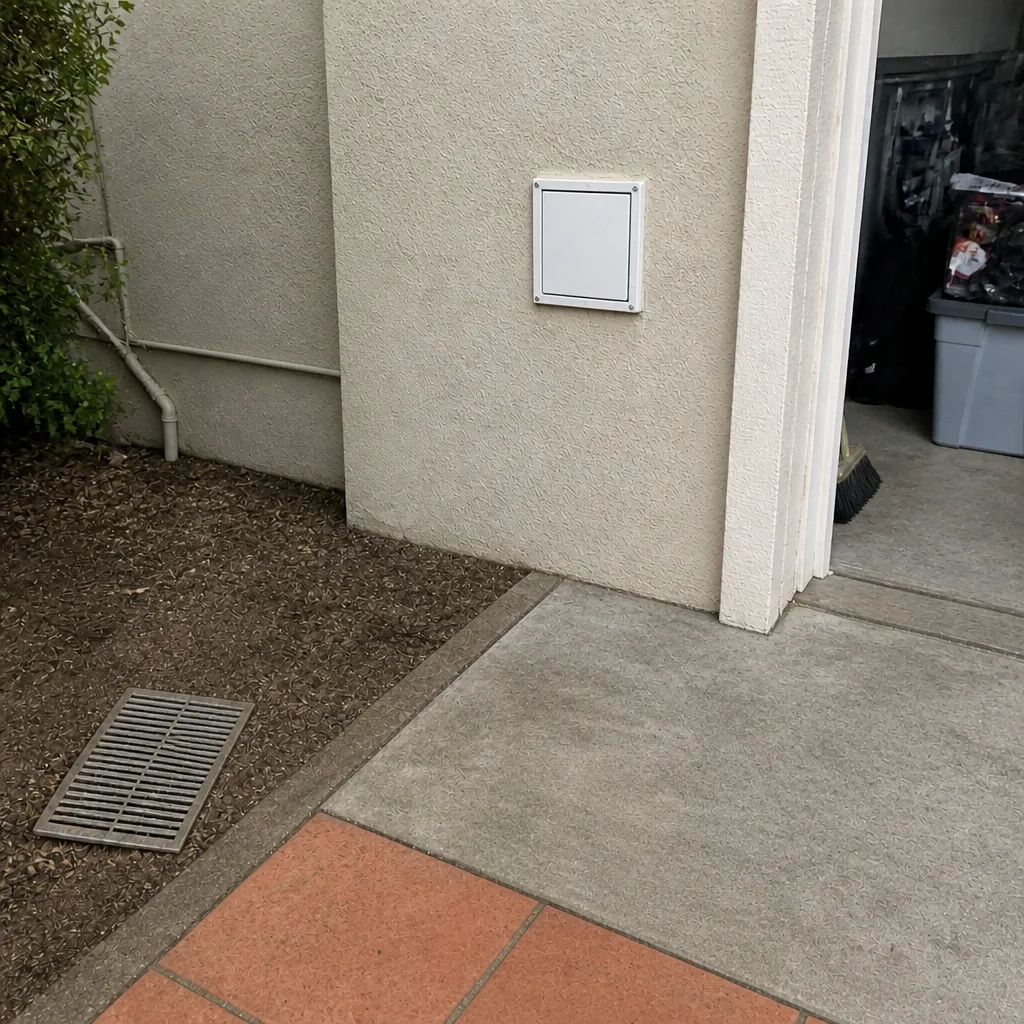
- Lint accumulates on the exterior vent flap, or the flap no longer opens fully.
- There’s a burnt or hot-lint smell near the dryer.
Lint is flammable, and it accumulates inside the vent run, not just in the trap. This is why dryer vent cleaning is a service we treat as core rather than an add-on. It addresses a fire-safety risk directly, separate from HVAC comfort and air quality. Many homeowners have never had their vent inspected since the home was built. If you can’t remember the last time yours was checked, that’s the sign.
What a Technician Actually Investigates
A thorough inspection isn’t just a visual pass through the register. Here’s the sequence a specialist should follow, and what each step catches.
- System map. Trace every supply and return run, count the registers, and match the system against what’s actually connected. Disconnected or abandoned runs are common in renovated homes.
- Liner and joint condition. Inspect the plenum, trunk, and branch joints for liner separation, tape failure, and mastic gaps.
- Flex duct integrity. Check every accessible flex run for crushing, kinks, and separation at the boot and trunk.
- Filter and return path. Confirm the filter is correctly fitted, the return duct isn’t pulling from an unsealed attic opening, and the filter housing is intact.
- Coil and drain pan condition. The moisture source is often here, and a technician who skips it may clean a system that immediately re-collects moisture.
- Airflow verification. Confirm airflow at each register before and after the work so the improvement is measurable, not just claimed.
- Dryer vent check. Inspect the vent run for lint buildup, kinks, and termination condition.
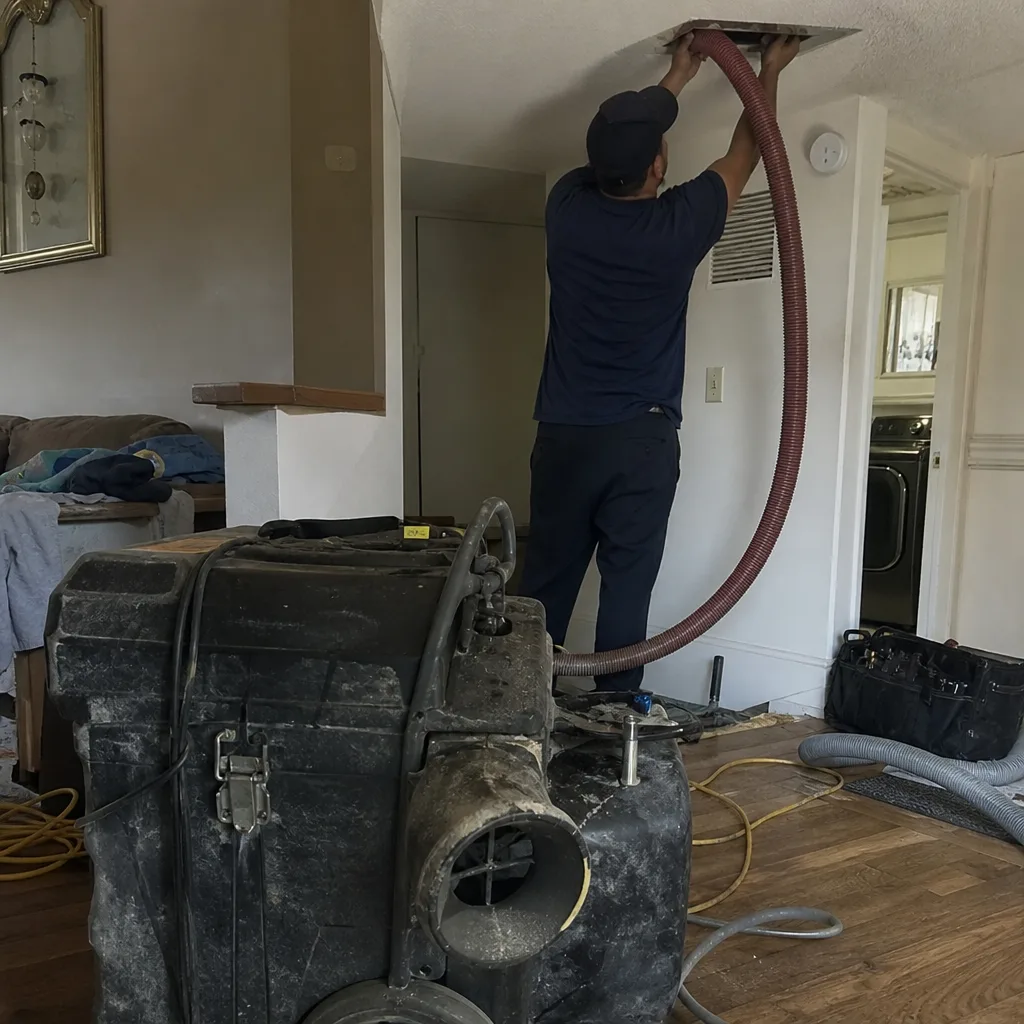
That’s what a proper air duct cleaning visit actually involves: looking before cleaning, then cleaning with equipment that’s up to the condition found. Professional-grade rotary brush systems like Rotobrush agitate and extract liner debris that a household vacuum can’t touch, and Nikro equipment handles the extraction. Abatement Technologies containment keeps the work from spreading contamination through the home during the process.
Common Mistakes to Avoid
- Judging the system by the register face alone. A clean-looking register tells you nothing about the duct behind the wall. Look at the boot and the first stretch of flex behind it, and treat the register as the window, not the room.
- Cleaning without diagnosing liner condition first. Cleaning a system with shedding liner just resets the dust clock. Have the liner and joint condition assessed before deciding whether cleaning is the right step.
- Confusing a size problem with a duct problem. If every room is weak, the system may be undersized or the blower restricted. If only some rooms are weak, the ducts are more likely the cause.
- Wiping mold off a register and calling it fixed. The register face is surface evidence. The source is behind the wall and often in the coil or drain pan. Wiping the register doesn’t address either.
- Ignoring the dryer vent because the dryer still works. A partially blocked vent still runs, it just runs hotter and slower. The warning signs accumulate slowly, which is exactly why they get missed.
- Skipping post-repair inspections. After any HVAC repair that opened the duct system, watch the affected rooms for new dust patterns for several weeks. A missed reseal shows up here.
- Assuming a filter upgrade fixes a source problem. A better filter catches more of what passes through it. It doesn’t stop a failing liner from shedding downstream. The source has to be fixed first.
See the difference
 Before
 After
 Before
 After
 Before
 After
When to Call a Professional
Some warning signs are DIY-observable; a few should prompt a call right away. Call us if you see fibers or liner fragments at a register, if you smell a musty or burning odor when the system starts, if a register barely moves a tissue while others push clearly, if there’s visible dark growth behind a register face, or if you can’t remember your dryer vent being checked. Also call after any pest intrusion into the attic or after an HVAC repair that opened the duct system, even if nothing looks wrong yet. Garden Grove Air Duct Cleaning Co offers free estimates in Garden Grove. We answer 24/7, with fast dispatch from 7am to 7pm, Sunday through Friday. Call (844) 686-1735 to book an inspection.
Frequently Asked Questions
There’s no honest per-vent price, because the cost depends on system size, duct condition, and whether repair and sealing are needed. Most quotes come as a flat price per system agreed before work starts. Call (844) 686-1735 for an exact quote. Estimates are free.
Cheap quotes usually skip diagnosis, use lower-powered equipment, and skip containment, which is where the real cost lives. A flat price for a whole-system cleaning with professional equipment and containment will always be higher than a per-vent teaser price that grows once the technician is on site. Ask what equipment is used and what the price covers before you book.
Yes, if you ask for before-and-after photos of your own ducts and an airflow check at each register. A technician should document what was removed and show you the improvement in airflow, not just report that the work was completed. Call (844) 686-1735 to schedule a free estimate.
Most homes in a dry, mild climate like Garden Grove’s benefit from an inspection every two to three years, with cleaning as needed. Homes with pets, recent renovation, wildfire smoke exposure, or pest intrusion should be inspected sooner. Call (844) 686-1735 for a free estimate.
A musty smell that appears only when the system runs usually means moisture somewhere in the supply path: a clogged drain pan, a wet coil, or humid duct runs. Biological growth follows that moisture, so the right fix is to find and correct the moisture source first, then clean and sanitize the affected sections. Call (844) 686-1735 for a free estimate.
Change the filter first, run the fan on low to let the filter do its job, and watch for a persistent smell or visible ash in the ducts over the following week. If the smell stays or ash is visible, have the system cleaned and sanitized. Call (844) 686-1735 for a free estimate.
The Bottom Line
Most duct problems announce themselves well before they become expensive. The dust that comes back too fast, the fiber on a dark shelf, the musty smell at startup, the room that never gets air, the dryer that takes an extra cycle: each of these is a specific signal pointing to a specific cause. Read them accurately instead of dismissing normal dust or panicking about a register face, and you’ll know when to clean, when to repair and seal, and when to call in a specialist to look behind the wall. Our technicians have up to 14 years of experience, and we handle the full scope under one visit: cleaning, repair and sealing, sanitizing, and dryer vent work. Call (844) 686-1735. We answer 24/7. Fast dispatch from 7am to 7pm, Sunday through Friday. Book your free estimate and get a straight answer on what your system actually needs.
Written by the team at Garden Grove Air Duct Cleaning Co.