
Last updated November 24, 2026
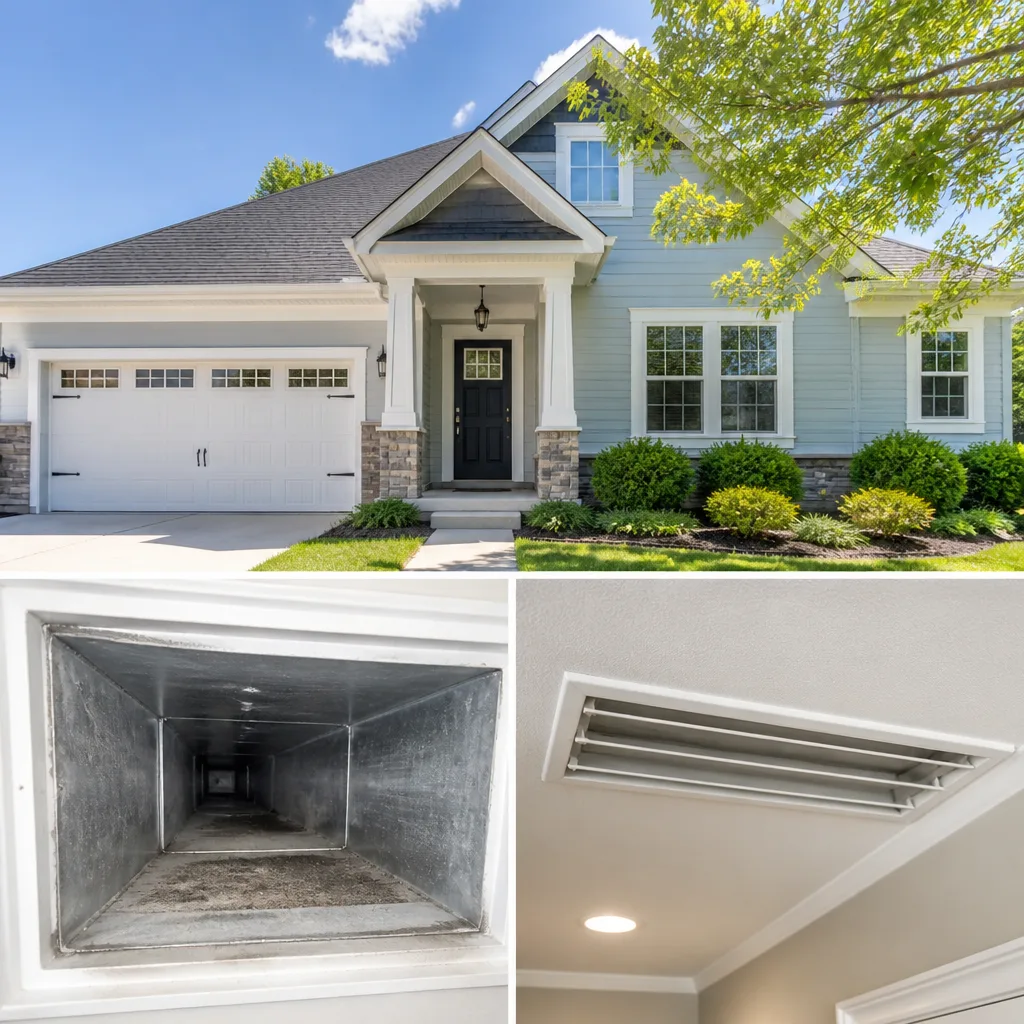 Whole-home duct cleaning
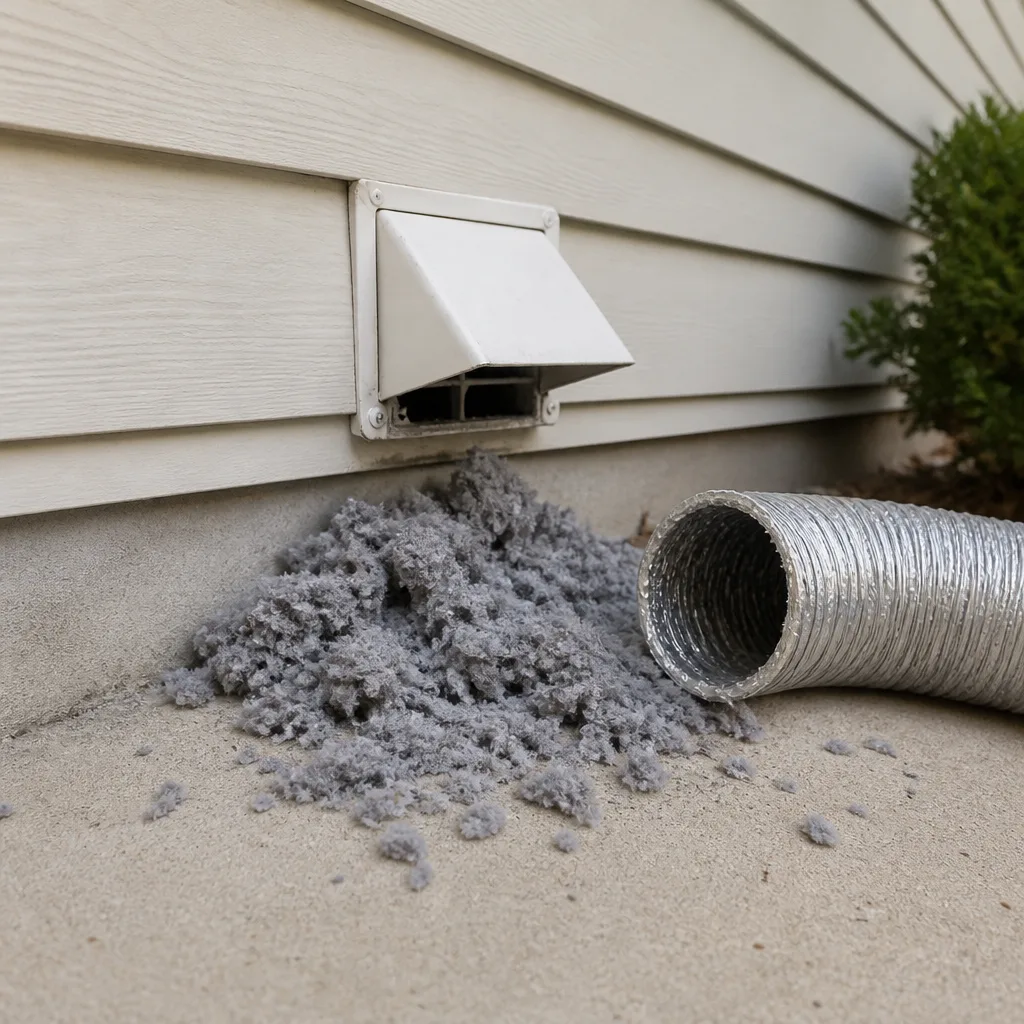 Dryer vent cleaning
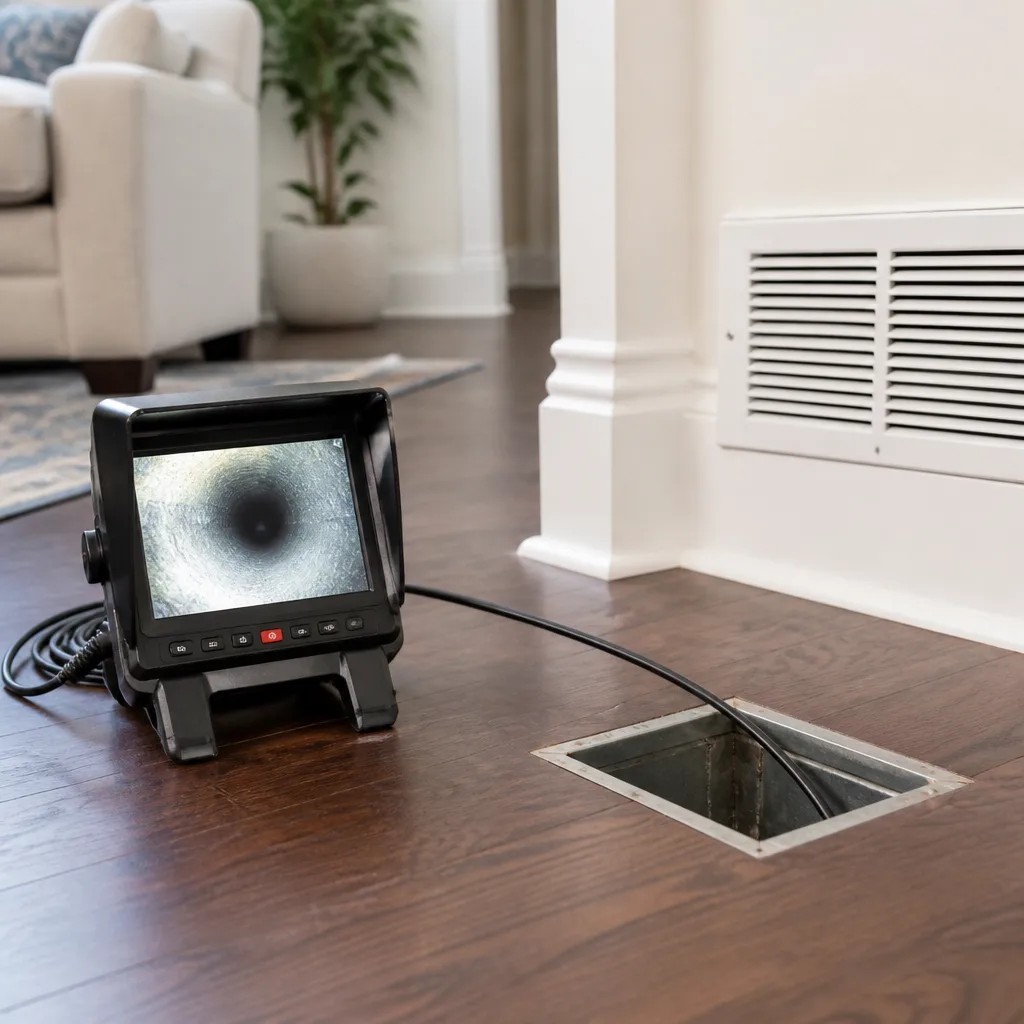 Camera inspection
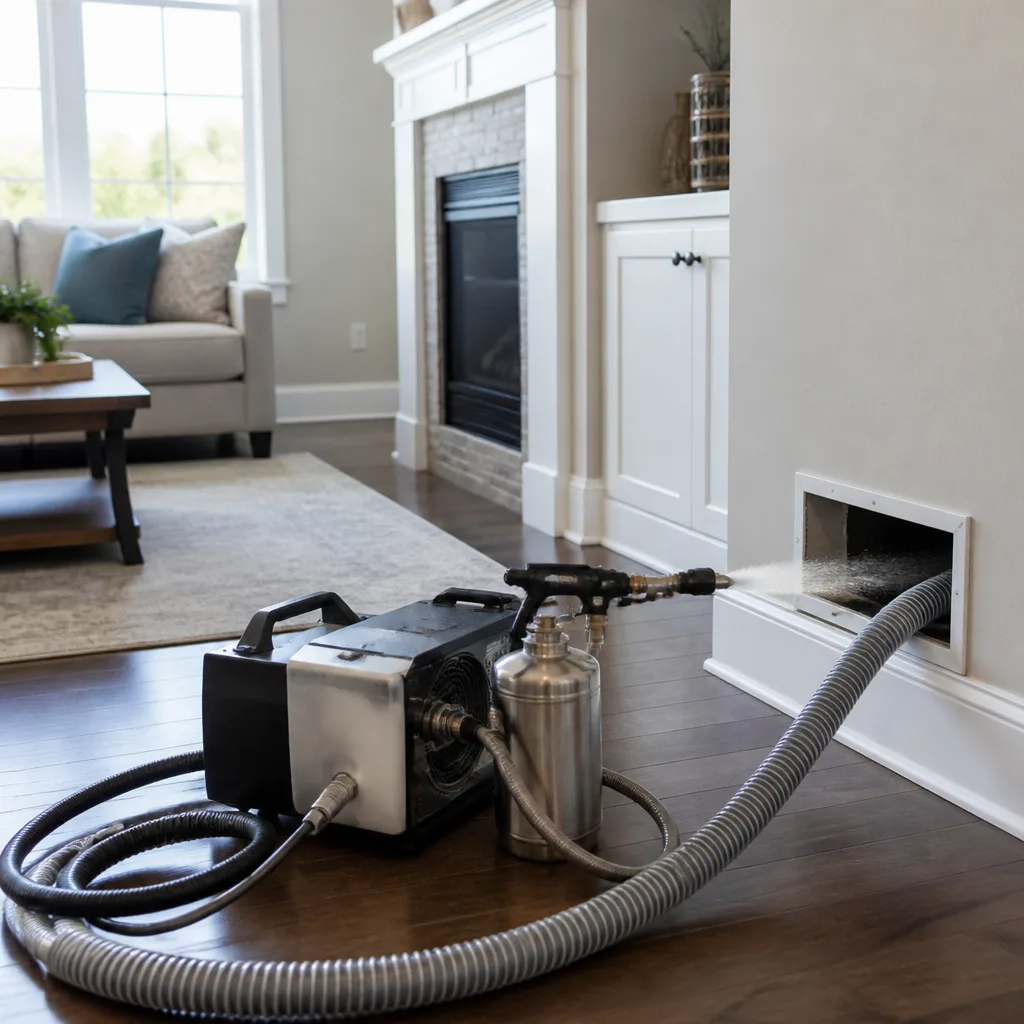 Sanitizing & deodorizing
Whole-system duct and dryer vent check with before-and-after photos - you see exactly what came out of your vents
That "$99 whole-house special" is a bait ad - the real number appears once they are in your hallway, or the "clean" is a shop-vac at the register. We photograph the inside of your ducts before and after instead.
The Complete Guide to Air Duct Cleaning in Garden Grove
Most homeowners assume the loud vacuum at the door is the whole job. It isn’t. A truck-mounted vacuum and a rotating brush aren’t optional upgrades; they’re the baseline for a clean that actually reaches past the first 18 inches of ductwork, yet a lot of low-bid cleaners working across Orange County skip both and call it done. What that buys you is a wiped vent cover and untouched debris a few feet away. Our goal here is to change how you hire. By the end of this guide you’ll know what a full-system clean actually involves, what each piece of equipment does, what a technician should be able to show you before and after, and how Garden Grove’s specific climate shapes what builds up inside your ducts in the first place.
Quick Answer
A full-system air duct cleaning removes built-up dust, debris, and microbial growth from the entire duct network: the supply and return plenums, the main trunk, every branch run, the registers, and the air handler components that move air through them. Doing it properly requires mechanical agitation (a rotary brush system like Rotobrush), high-powered extraction (a commercial unit like Nikro), and negative-air containment so loosened debris leaves the house instead of settling into your rooms. A surface vacuum at each vent is not a duct cleaning, and in a Garden Grove home with mild, humid air and heavy pollen months, that difference shows up fast.
Styles & brands we work with
- Whole-home duct cleaning
- Dryer vent cleaning
- Camera inspection
- Sanitizing & deodorizing
Table of Contents
- What “Full-System” Cleaning Actually Means
- The Equipment That Separates a Real Clean From a Surface Wipe
- How Garden Grove’s Climate Shapes What’s in Your Ducts
- What a Proper Cleaning Looks Like, Step by Step
- What Your Technician Should Show You Before and After
- Why Dryer Vent Cleaning Belongs in the Same Conversation
- How to Spot a Bad Cleaning After the Crew Leaves
- What Air Duct Cleaning Costs in Garden Grove
What “Full-System” Cleaning Actually Means
The phrase gets used loosely. In practice, “full-system” refers to treating the entire air path as one connected assembly rather than a series of isolated vents. In most homes, the air handler draws return air through one or more return grilles, pushes it through the main trunk line, and distributes it across branch runs to each room. Debris doesn’t politely stay put. Dust shed from one section migrates and collects at the joints, elbows, and takeoffs where airflow slows.
That’s why cleaning the vents alone is close to pointless. Picture a long hallway with dirt at both ends. Sweeping one end pushes half of it toward the other. Cleaning the supply registers without touching the return side, the main trunk, or the plenum (the box connecting the ductwork to the air handler) just redistributes the load.
A true full-system scope includes:
- All supply and return registers and grilles, removed and cleaned individually
- Every branch run from takeoff to register boot, agitated and extracted
- The main trunk line, which often holds the heaviest accumulation
- Supply and return plenums, where debris concentrates right at the equipment
- The air handler cabinet and blower compartment, accessed and cleaned around the components
- The evaporator coil surface, which acts like a filter for anything that slips past the return grille
In Garden Grove, the homes we see most often have older galvanized duct systems with taped or mastic-sealed joints. Those joints are also where you’ll find leakage and debris accumulation simultaneously. That’s a repair and sealing question as much as a cleaning one, and it’s worth raising during the same visit rather than scheduling a second contractor later.
The Equipment That Separates a Real Clean From a Surface Wipe
You can’t clean what you can’t reach, and you can’t reach what you can’t agitate. Consumer vacuums and shop-vac setups create suction at the opening but lose nearly all of it a few feet into the run. Professional duct cleaning relies on three equipment categories working together, and knowing what each does tells you what to ask about before you book anyone.
1. Mechanical agitation
Loose dust that has settled and bonded to duct walls won’t move on suction alone. Agitation breaks that bond. The standard tool is a rotary brush system, and the Rotobrush is the reference-grade example most specialists rely on. A flexible brush head travels the length of each run, spinning against the duct walls to loosen the accumulated layer. Without this step, a vacuum pulls air through a debris layer that stays right where it is.
2. High-volume extraction
Once debris is airborne, it has to leave the system. Nikro cleaning equipment is built for that job: high-powered extraction units designed to move large volumes of air and capture what the brush loosens. This is the equipment category where budget operators cut corners most often, swapping in a portable vacuum that can’t maintain suction through a full trunk line.
3. Containment and negative air
Here’s the piece homeowners rarely hear about. When you agitate a duct system, you send a lot of particulate into the air. Without containment, some of it settles in the rooms you live in. Abatement Technologies negative-air and containment equipment, the same standard used in professional remediation work, keeps the work area under negative pressure so loosened debris travels toward the extraction unit rather than out into your living space. In our view this is the single most underrated part of a duct cleaning job, and it’s a fair question to ask any company you’re considering.
Our technicians have up to 14 years of experience running all three categories together, and we can tell you from that experience that equipment names on a website mean nothing if the crew doesn’t actually deploy them in your home. Ask what will be on site.
How Garden Grove’s Climate Shapes What’s in Your Ducts
Garden Grove sits a few miles inland from the coast, and that position creates a specific combination: mild temperatures year round, enough marine influence to keep humidity elevated, and long stretches of dry, breezy spring weather that carry pollen from the surrounding green space and tree canopy. For your ducts, those three factors interact in ways that differ from homes further inland.
Elevated humidity matters because it’s the condition mold and mildew need. A duct system that stays cool and slightly damp for weeks on end is a better environment for microbial growth than one baked dry by desert air. That’s not a reason to panic; it’s a reason to look inside the system periodically rather than assume it’s fine. In our experience, Garden Grove homes with evaporator coils that run hard through the warmer months are the ones where you’ll find the damp-dust combination that smells faintly musty when the system first kicks on.
Pollen is the second factor. Our spring pollen load is real, and it doesn’t stop at the return grille. A standard return filter catches a portion of it, and the rest settles into the return ducts and plenum over months. If anyone in the household deals with seasonal allergies, that accumulation is worth understanding. Cleaning the system doesn’t eliminate pollen in the outdoor air, but it removes the reservoir that re-releases stored pollen every time the blower cycles.
One more Garden Grove-specific point: many homes here were built in the middle decades of the last century and have been remodeled at least once. Remodels are notorious for construction dust that gets pulled into the return system and never cleaned out. If you’ve had work done and the ducts weren’t sealed during it, that debris is still sitting in there.
What a Proper Cleaning Looks Like, Step by Step
A professional full-system cleaning follows a sequence for a reason. Skip a step and the rest of the job degrades. Here’s the order we run it in, and what you should expect to see from any qualified company.
- Inspection and camera review. Before any equipment runs, the technician inspects the accessible ductwork and, where possible, runs a camera down the main runs and into the plenum. This establishes a baseline and identifies problem areas.
- Containment setup. Negative-air equipment is positioned at the access point, and floor protection goes down. This step is easy to skip and easy to notice if it’s skipped.
- Register and grille removal. Supply and return covers come off and get cleaned separately.
- Agitation, run by run. Rotary brush agitation moves through each branch run and the main trunk, working from the farthest points back toward the extraction source.
- Extraction and plenum cleaning. The high-volume unit pulls loosened debris out of the system while the technician cleans the plenums and the air handler cabinet.
- Coil and component cleaning. The evaporator coil surface and blower get attention, since those are the components that touch every cubic foot of air your home circulates.
- Sanitizing. Where microbial growth is present or odor is an issue, an air quality sanitizing treatment goes into the system after cleaning, not before. Sanitizer sprayed onto dirty duct walls does nothing useful.
- Reassembly and final inspection. Registers go back on, and a second camera pass documents the result.
If you want the full-service version of this in one visit, that’s the scope of our air duct cleaning service: cleaning, and any repair, sealing, or sanitizing the inspection turns up, handled together so you don’t need a second company to finish the job.
What Your Technician Should Show You Before and After
This is the part homeowners ask about most, and it’s the right question. Anyone can tell you the ducts are clean. A company that actually did the work can prove it, and here’s the standard we hold ourselves to.
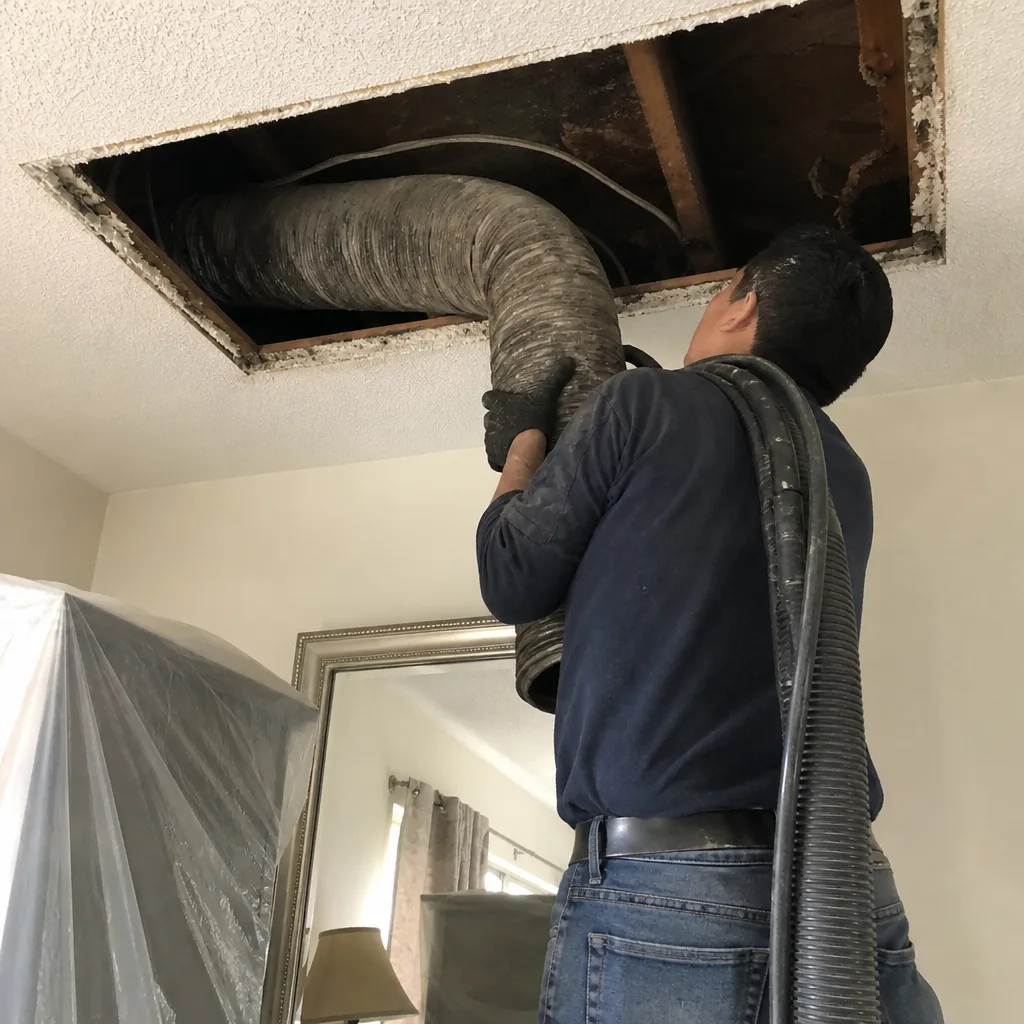
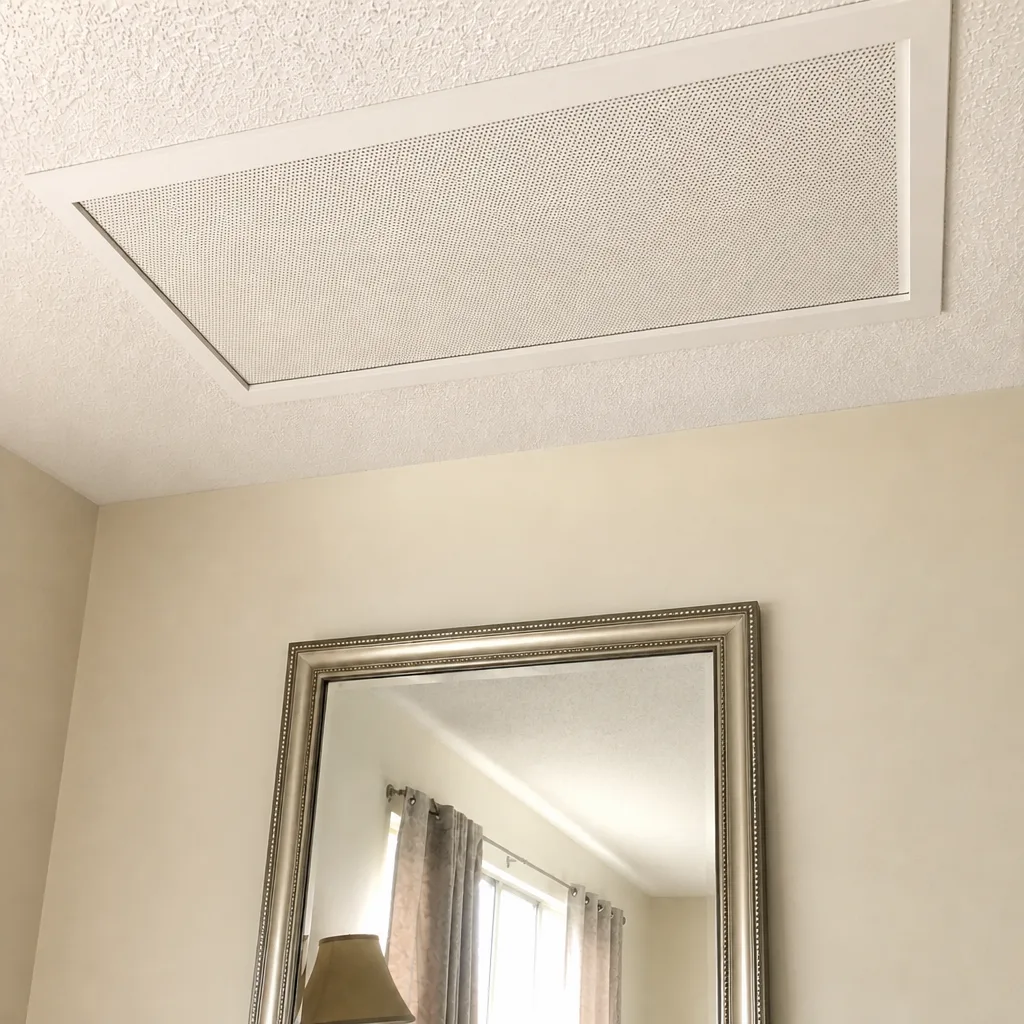
- Camera footage from inside the ducts. Before and after. Not a photo of a vent cover. Footage from inside the run showing the duct wall surfaces before agitation and again after extraction.
- A visual comparison of the collected debris. The extraction unit captures what comes out. Seeing the volume and character of it (dust, insulation fragments, construction grit) tells you something real about the condition of the system.
- A look at the plenum and coil before and after. Those are the highest-debris areas in most homes, and they’re also the easiest to photograph down a short access.
- A written summary of what was found, including anything that needs repair or sealing and what that would involve.
Ask for these up front. Any company confident in its process will welcome the request. Any company that brushes it off is telling you something useful.
Why Dryer Vent Cleaning Belongs in the Same Conversation
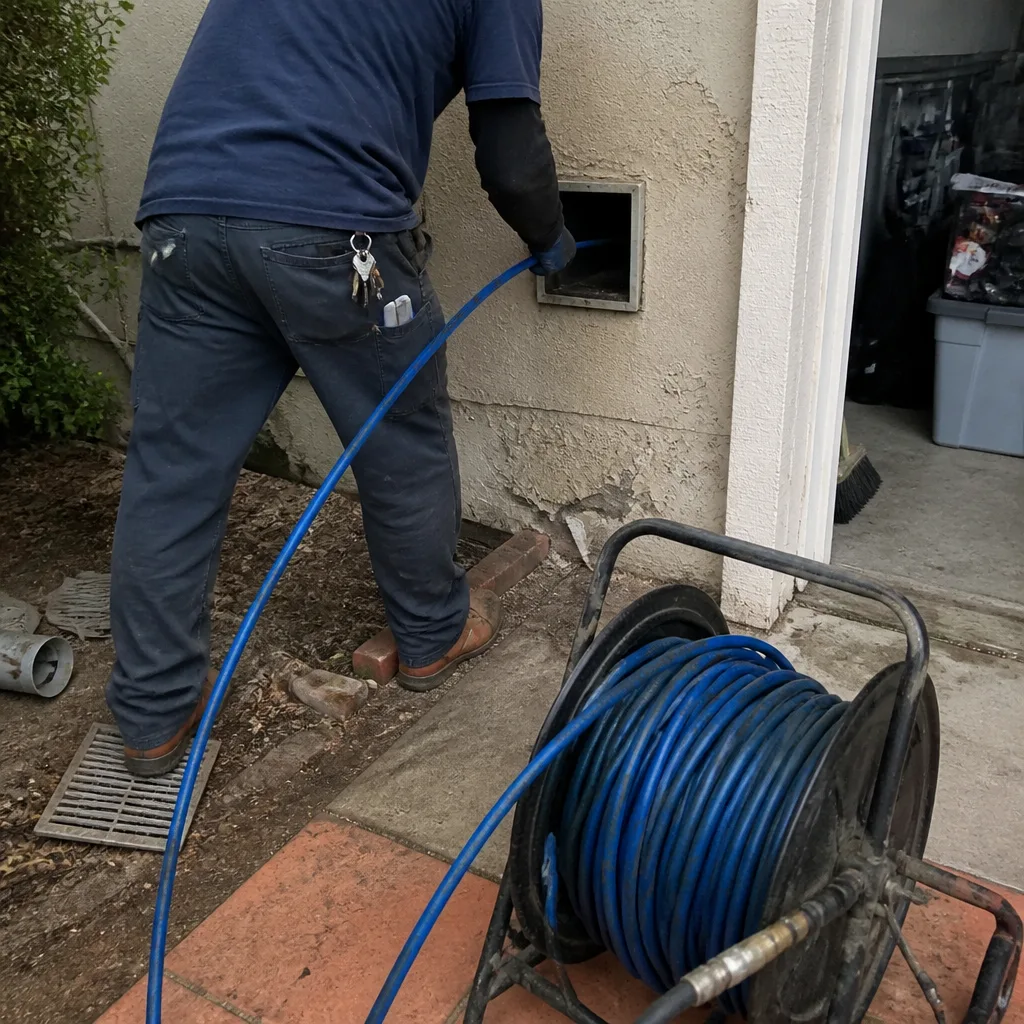
Air duct cleaning and dryer vent cleaning get lumped together as “airflow services,” but the dryer vent carries a distinct set of risks. Lint is highly combustible, and a vent line that has accumulated lint restricts airflow, which raises the operating temperature of the dryer. That’s a documented fire-safety concern in residential homes, and it’s separate from any comfort or efficiency issue.
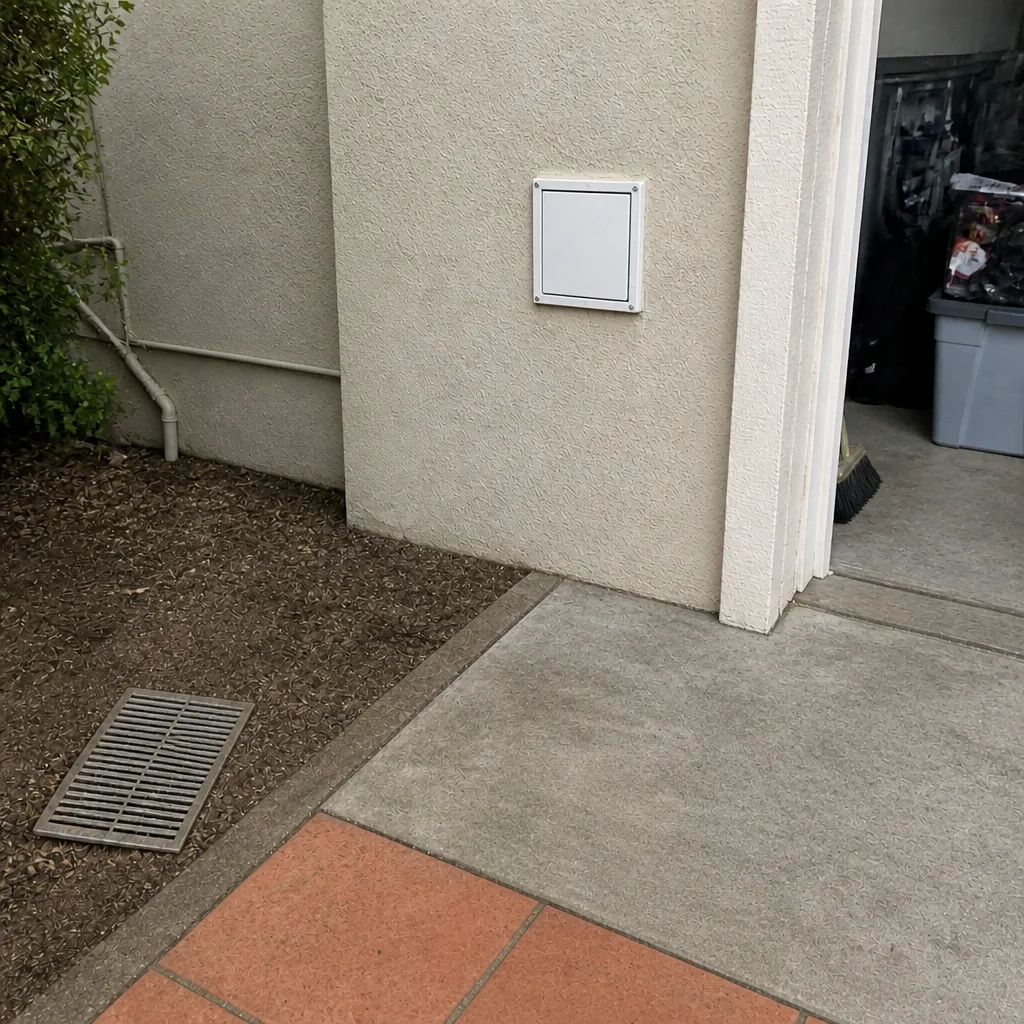
In Garden Grove, dryer vents in older homes often run long distances with multiple elbows to reach an exterior wall. Every elbow is a lint trap. If you’ve noticed clothes taking longer to dry, or the exterior flapper not opening fully during a cycle, that’s worth inspecting rather than ignoring. Our dryer vent cleaning service addresses exactly that, and because we’re already inside the home for a duct job, it makes sense to handle both in one visit. Clean ducts, safer home, as we think of it.
The same goes for the wider HVAC cabinet and coil surfaces. Our HVAC cleaning service covers the equipment side of the system, which works hand in hand with the ductwork itself.
How to Spot a Bad Cleaning After the Crew Leaves
Some signs of a rushed or ineffective job show up immediately. Others take a few weeks. Here’s what to watch for, and what each sign usually points to.
- Dust returns faster than it should. If visible dust settles on surfaces within days of a cleaning, there’s a good chance the debris was loosened but not extracted, and your blower is now redistributing it.
- The same musty smell persists. Odor that returns quickly usually means microbial growth was never addressed, or the sanitizing step was skipped.
- No before-and-after documentation. If you got a verbal “all done” and nothing else, you have no way of knowing what was actually cleaned. That’s on the company, and it’s a red flag.
- The plenum is still dirty. If you can access your air handler cabinet and the area around the plenum looks untouched, the job probably didn’t extend past the branch runs.
- The technician never asked about dryer vent cleaning. There’s no scenario where a duct specialist should recommend an annual duct cleaning but say nothing about a dryer vent with compromised airflow.
- Equipment was a single shop-vac or portable vacuum. That’s the tell that containment, agitation, and high-volume extraction weren’t part of the job.
- You were pitched a sanitizer spray before any cleaning. Sanitizing is a finishing step, not a standalone service. Applied to dirty ducts, it’s marketing, not cleaning.
What Air Duct Cleaning Costs in Garden Grove
Air duct cleaning in Garden Grove generally runs somewhere in the broad range you’d expect for a full-system clean in Orange County, with the final number driven by the size of the home, the number of runs, the number of systems (some homes here have two), and whether repair, sealing, or sanitizing is included. Because the honest answer depends on the specific house, we set one flat price per system, agreed before work starts, and price per system rather than per vent. That structure exists specifically to prevent the classic bait-and-switch where a coupon price turns into a much larger invoice once the technician is on site.
Here’s what to compare when you’re looking at quotes:
- Whole-system pricing, not per-vent line items, which tend to balloon as the job goes on
- Whether the plenums, coil, and air handler are included or treated as add-ons
- Whether containment equipment is part of the job, since it affects both quality and cleanup
- Whether sanitizing and sealing are quoted upfront or pitched on site
- Whether dryer vent cleaning is offered in the same visit, which saves a second appointment
Why are some quotes so much cheaper? In our experience, it comes down to equipment. A portable vacuum and a vent wipe are fast, cheap, and easy to sell. Rotobrush agitation, Nikro extraction, and Abatement Technologies containment are none of those things, and companies that don’t run them can’t clean to the same standard, so they price accordingly. For an exact quote on your home, call (844) 686-1735. Estimates are free.
Common Mistakes to Avoid
- Hiring on price alone. The lowest quote in Garden Grove almost always reflects the cheapest equipment. A cheap job you have to redo is more expensive than one clean job.
- Assuming the vents are the whole system. Cleaning registers without the plenum, trunk, and branch runs leaves the majority of the accumulation in place.
- Skipping the dryer vent. It’s a distinct fire-safety concern and it’s easy to overlook when you’re focused on the HVAC side.
- Letting a company sanitize before cleaning. Sanitizer needs a clean surface to be meaningful. Make sure cleaning comes first.
- Not asking what equipment will be on site. Before you book, ask for the equipment categories by name. If a company can’t tell you, that’s an answer in itself.
- Failure to document. No camera footage, no photos, no summary. You can’t verify what wasn’t shown to you.
- Cleaning before major construction is done. If you’re remodeling, clean the ducts after the work is finished and the duct system has been sealed against construction dust, not before.
See the difference
 Before
 After
 Before
 After
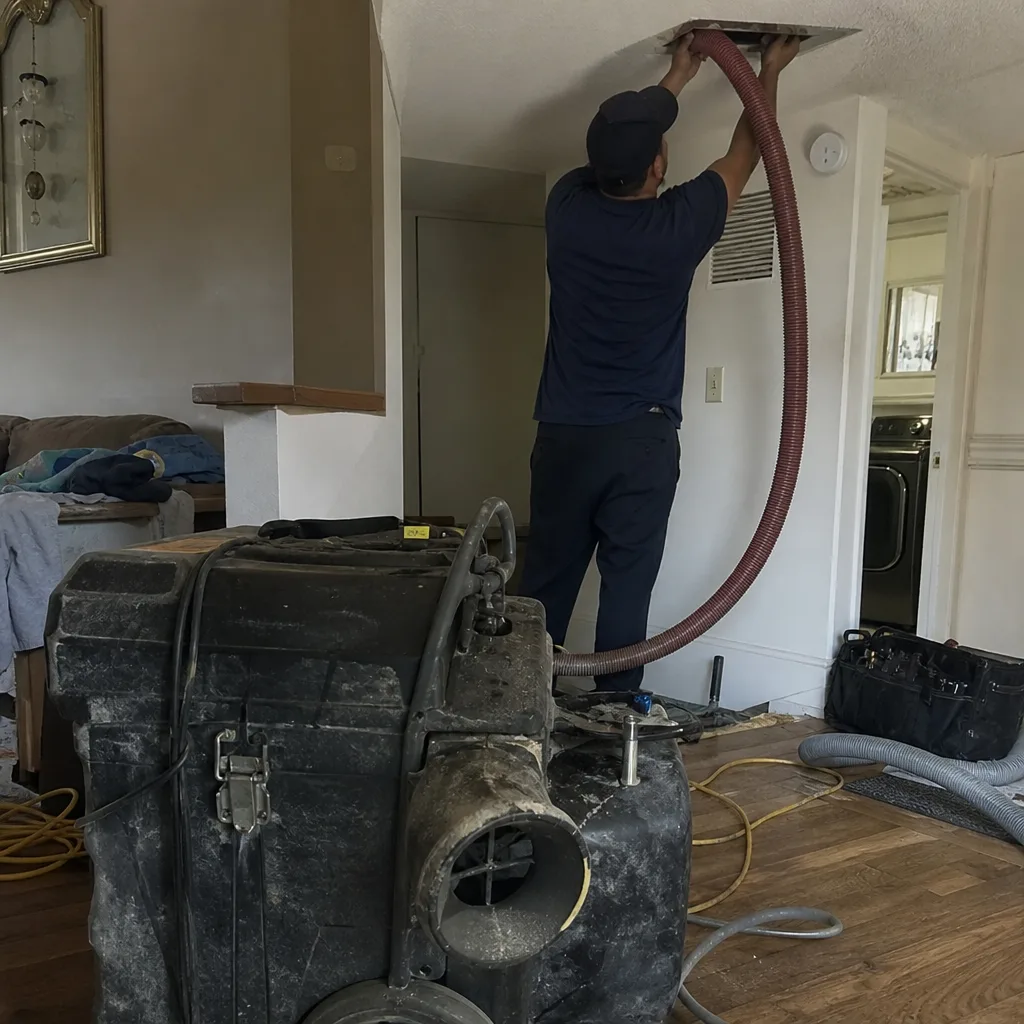 Before
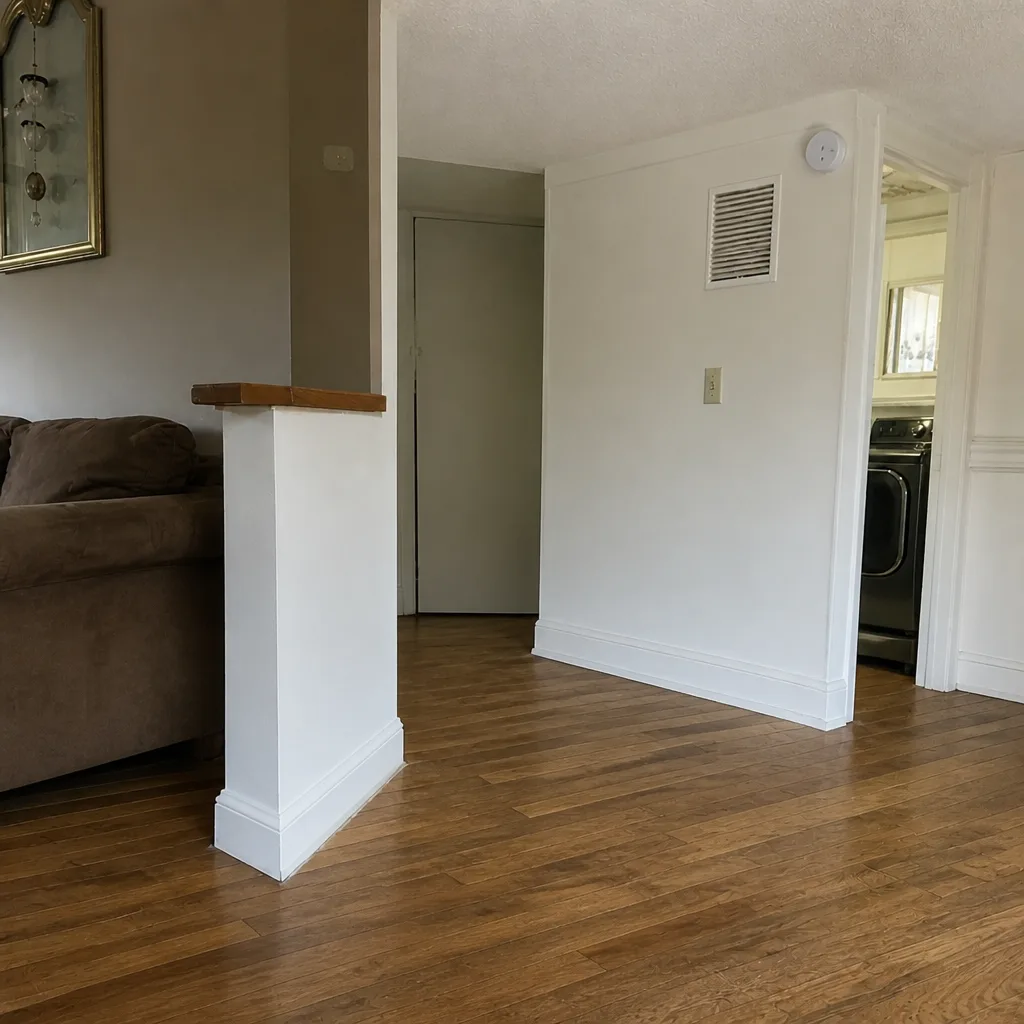 After
When to Call a Professional
Air duct cleaning isn’t a service you book on a schedule for its own sake. There are specific scenarios where it’s clearly worthwhile: after a major remodel or after the HVAC system was installed without protection, when visible dust is accumulating at the registers faster than it should, when a musty odor comes out of the vents on startup, if someone in the household has respiratory or allergy concerns that persist indoors, or if you can’t remember the last time the system was cleaned and the home is older. Dryer vent cleaning is a separate trigger. Any change in dryer cycle time or a warm exterior vent line is worth an inspection. Garden Grove Air Duct Cleaning Co offers free estimates in Garden Grove. Call (844) 686-1735. We answer 24/7. Fast dispatch from 7am to 7pm, Sunday through Friday.
Frequently Asked Questions
There isn’t a single number, because the price depends on the size of the system, the number of runs, and whether you have more than one system. We set one flat price per system after seeing the home, agreed in writing before any work starts. We don’t quote per vent, because per-vent pricing is where the bait-and-switch happens. Call (844) 686-1735 for an exact quote. Estimates are free.
Cheaper quotes usually reflect cheaper equipment. Portable vacuums and vent wipes don’t require Rotobrush agitation, Nikro extraction, or Abatement Technologies containment, all of which cost money to run. The lower price isn’t a deal; it’s a job that stops at the grille. Ask what will be on site before you book. Call (844) 686-1735 to discuss what a full-system clean in Garden Grove involves.
Ask for before-and-after camera footage from inside the ducts, a visual of what the extraction unit collected, and a written summary of findings. Any company that runs a proper process can provide all three. If a company can’t or won’t document the work, that tells you enough. Call (844) 686-1735 to schedule an estimate with a company that will.
There’s no universal schedule, and any company that tells you there is probably wants your money more than your trust. In Garden Grove, we generally see worthwhile reasons to clean after major construction, when there’s been a system changeover, when visible dust or odor returns to the vents, or when a respiratory concern is the driver. Call (844) 686-1735 for an honest assessment of whether your specific home needs it.
It changes what you’ll find more than how often you should clean. The mild, humid air and long pollen season here mean return ducts can carry damp dust and pollen accumulation that stays in place and re-releases every time the blower runs. If you notice musty odor on startup, that’s worth a look. Call (844) 686-1735 for a free estimate.
Yes, and we consider it a core service rather than an add-on. Lint accumulation in a dryer vent is a documented fire-safety concern, separate from any HVAC issue. In Garden Grove’s older homes, the vent run often includes several elbows where lint builds up. It makes sense to handle it during the same visit. Call (844) 686-1735 to schedule.
The Bottom Line
The difference between a duct cleaning worth paying for and one you’ll need to redo comes down to equipment and transparency. Professional agitation with Rotobrush, high-volume extraction with Nikro, containment with Abatement Technologies equipment, and before-and-after documentation are the standard, not the upsell. Any company running that process should be happy to show it to you, and a company that can’t is telling you where its limits are. In Garden Grove’s climate, where humidity and pollen shape what builds up inside a home, that standard matters more than it does in a drier, quieter air environment. Whether you decide to clean now or later, know what a real full-system clean requires before anyone gets near your door.
We work with Honeywell and Aprilaire whole-home air quality systems too, so filter and purification upgrades can be discussed in the same visit as the cleaning, rather than as a follow-up. Our Garden Grove Air Duct Cleaning Co team can walk through the full scope. Call (844) 686-1735. We answer 24/7. Fast dispatch from 7am to 7pm, Sunday through Friday.
Written by the team at Garden Grove Air Duct Cleaning Co.